Contact
Let's work together
PIM Akeneo - Project Management of a 5-Year Migration to SaaS

PIM Akeneo - Project Management of a 5-Year Migration to SaaS

End-to-end project management of the central product data system for 2,000+ real estate programs. Coordinated 4 vendors, 10+ stakeholders across 4 departments, and delivered a zero-downtime migration from on-premise Kubernetes to Akeneo SaaS.

2019 - 2024
5 years
Technical Lead then Project Manager - PIM/DAM
Akeneo PIM EnterprisePHP / SymfonyMySQLElasticsearchRabbitMQDockerKubernetesGitLab CIHelmTyk API GatewayAzure AD SSONew RelicAWS S3

Programs Managed

2,000+

Real estate programs (G2P codes) in the PIM

Automated Reports

15,000+

Import reports generated over 4+ years

Vendors Coordinated

4

External agencies and partners managed (Kariba, DnD, Akeneo, Claranet)

Partner Portals

25+

Fed via Export Ligneurs downstream

Stakeholders

10+

Internal and external stakeholders coordinated across 4 departments

Presentation & Definition

What is this project about?

The PIM (Product Information Management) is the central product data management system of Groupe Pichet. Built on the open-source solution Akeneo PIM (Enterprise Edition), it centralizes all information about the group's real estate programs (new builds, rental investment, property management) and distributes them to all distribution channels.

The system serves as the single source of truth for product data across the entire organization. Every real estate listing published on the group's websites (Pichet Immobilier, Pichet Investissement, Pichet Location), partner portals (SeLoger, LeBonCoin, BienIci, and 22+ others), the CRM system (Hermes), and business intelligence tools originates from this PIM.

Jose DA COSTA took ownership of this system upon his arrival in January 2019, replacing Andoni L. (Kariba) who explicitly transferred his scope. As Technical Project Manager, he piloted the entire PIM lifecycle over 5 years: coordinating 4 external vendors (Kariba, DnD, Akeneo, Claranet), driving version migration, managing the import pipeline development, steering the cloud SaaS migration, and supervising daily operations with 10+ internal and external stakeholders.

Business Domain

Real Estate / MarTech - Product data management for new builds, rental investment, and property management programs across a major French real estate group.

Target Users

Marketing teams, sales teams, partner agencies (ligneurs), business intelligence team - both internal B2B users and external partner integrations.


System Architecture Overview

Objectives, Context, Stakes & Risks

Understanding the strategic landscape

Objectives
  • Migrate PIM from v1.4 to Akeneo PIM v2.3 (then v3, v4) preserving data integrity and service continuity
  • Automate data import from ERP Thetrawin via a daily XML import pipeline
  • Implement the G2P mediation system: automatic matching between "fake" programs (manually created in PIM) and real ERP programs
  • Migrate to Akeneo SaaS: transition from on-premise hosting (Kubernetes at Claranet/Oxalide) to Akeneo cloud platform
  • Set up Azure AD SSO for unified access to PIM SaaS
  • Supervise and operate the PIM daily (alerts, corrections, attribute and channel evolution)
Context

Groupe Pichet is a family-owned real estate group headquartered in Pessac (Bordeaux Metropole), covering the entire real estate value chain: new builds, rental investment, property management, hospitality (All Suites, Mondrian/Ennismore), student residences, and vineyards.

The IT department, led by Jean-Luc O., was organized into dedicated divisions (SI Marketing/IT Factory, Middleware/ESB, Cross-functional DSI, SI Finance/HR). The digital transformation required a robust, centralized product data hub to ensure consistent data quality across all channels.

Jose inherited a PIM system running on an outdated version (v1.4) with a partially manual import process and no automated monitoring. The challenge was to modernize this critical infrastructure while maintaining zero downtime on data distribution.

Methodology & Governance

The project followed a hybrid Agile methodology adapted to the constraints of a large enterprise environment:

  • Agile Scrum with 2-week sprints for development phases (migration, pipeline, SaaS) - managed via Jira (projects PIMUP23, MIGPIM, PIM, SIMCT) with formal sprint planning, reviews, and retrospectives
  • COPIL (Steering Committee) with management for strategic decisions (SaaS migration, vendor selection, budget allocation)
  • Weekly sync meetings with Franck C. (N+1) covering technical progress, budget tracking, and risk status
  • Confluence documentation: architecture decision records, environment guides, API credentials, Postman collections
  • Formal acceptance testing using structured test books (DnD/Pichet) for each major release
  • Release management: deployment plans with rollback procedures, coordinated with the DevOps team and Claranet for production releases
  • Vendor coordination: dedicated meetings with Akeneo (quarterly business reviews), DnD (sprint cadence), Kariba (ad-hoc technical sync)
Business Stakes

Direct Business Impact

The PIM feeds all group websites and 25+ partner real estate portals - any data error propagates instantly to all sales channels.

Massive Data Volume

2,000+ real estate programs (G2P codes), 200,000+ docs, 100+ automated reports per month in production.

Regulatory Compliance

The PIM manages listing data (prices, availability, surfaces, docs) - errors can have legal consequences for the group.

Project Constraints

Budget

18,000 EUR/month OPEX for cloud infrastructure (Docker/Kubernetes). Akeneo SaaS Serenity license contract negotiated with vendor. Multiple vendor contracts managed simultaneously (Akeneo, Claranet, DnD, Kariba).

Resources

No dedicated PIM team - Jose was the sole PIM owner coordinating 2 external agencies (DnD, Kariba) and 1 vendor (Akeneo). Internal resources shared across multiple DSI projects.

Dependencies

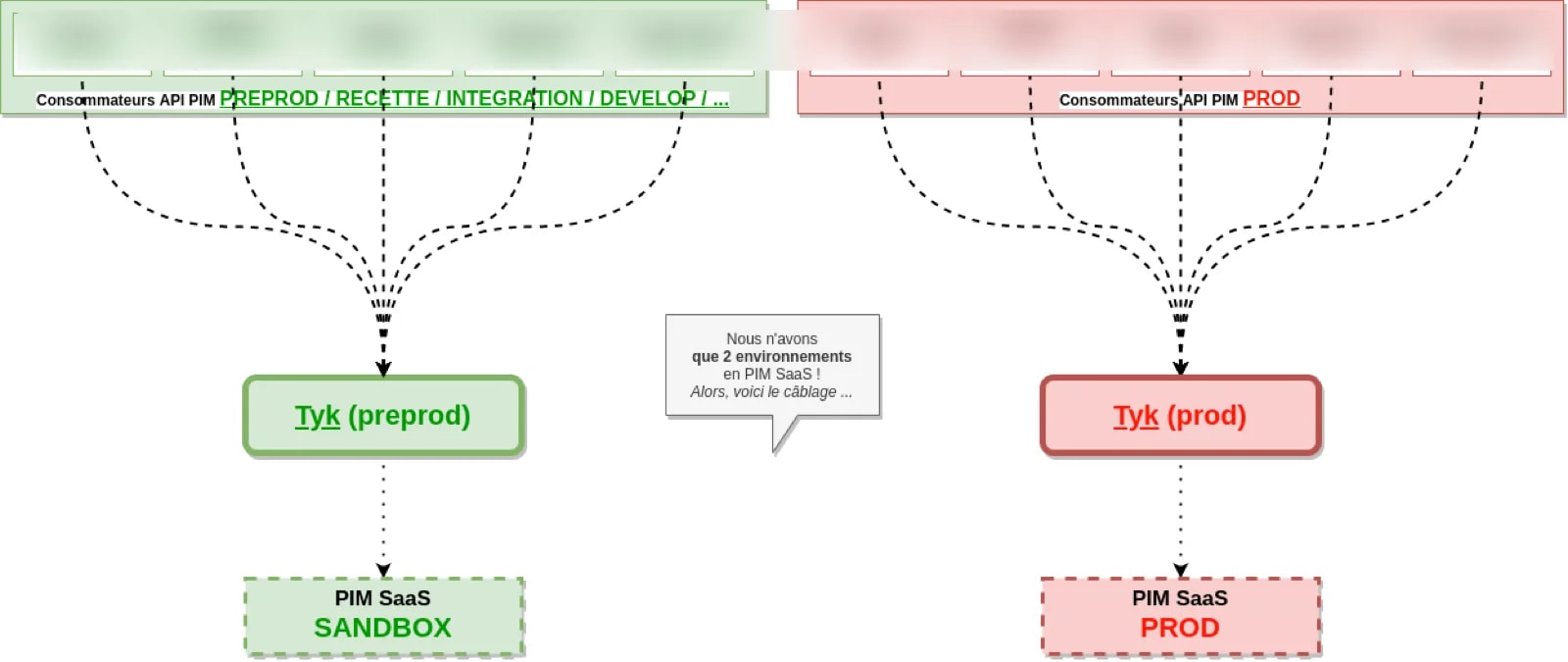
Strong dependency on ERP Thetrawin (daily XML exports), ESB middleware (TIBCO), Claranet hosting, Azure AD for SSO, and Tyk API gateway. Any change required cross-team coordination.

Identified Risks

Data Loss During Migration

Critical risk during v1.4 to v2.3 migration - mitigated through exhaustive acceptance testing (DnD/Pichet test book) and 200,000 image verification.

API Regression After Migration

High risk of breaking existing API consumers on Tyk gateway - mitigated through dedicated API testing branches and staged rollout.

Thetrawin Import Pipeline Failure

Daily import disruption impacts data freshness on all portals - mitigated through automated monitoring and email alerts to the team.

G2P Mediation Inconsistencies

False program matching could corrupt listing data - mitigated through detailed fusion notifications and business team validation.

Risk Mitigation Coverage

The Steps - How I Managed It

A chronological journey through 5 years of project ownership and vendor coordination

Project Progress Over Time
Phase 1
Scope Takeover & Migration Coordination
Jan - Sep 2019
  • Structured knowledge transfer from predecessor (Kariba) - built complete scope documentation on PIM & ligneurs
  • Coordinated 3 vendors (Kariba, DnD, Akeneo) for migration to v2.3 - 50+ Jira tickets tracked across PIMUP23/MIGPIM
  • Led acceptance testing with DnD agency using structured test book - verification of 200,000 docs validated with business teams
  • Organized Kick-Off PIM v2 (PowerPoint presentation) and release plan for migration deployment
  • Attended Akeneo PIM Summit 2019 in Paris with N+1 Franck C. - vendor relationship building
  • Managed rollout of new PIM v2 credentials to all users across 4 departments
Phase 2
Pipeline Go-Live & Operational Setup
Oct 2019 - Dec 2020
  • Delivered and validated the Thetrawin import pipeline into production - automated monitoring with 100+ reports/month
  • Set up operational reporting: daily automated email reports to 5+ stakeholders (Nicolas F., Mulamba K., Cyril M.)
  • Coordinated G2P mediation system launch with business teams - validation workflow with Gaetan B.
  • Managed stabilization phase: prioritized bug fixes, arbitrated scope for new channels with marketing teams
  • Piloted PIM v4 POC study (SIMCT project) - cost/benefit analysis for version upgrade vs SaaS migration
  • Initiated SaaS migration project: vendor negotiation with Akeneo, first bootstrap archive prepared
Phase 3
SaaS Migration - Strategic Project
Jan 2021 - Dec 2021
  • Role formalized as "PO PIM/DAM" - full product and project ownership with budget responsibility
  • Negotiated Akeneo SaaS Serenity contract (DocuSign) - license terms, SLA, and MSA conditions
  • Coordinated SSO Azure AD integration with internal security team (KESD-18444/18633)
  • Managed multi-environment deployment strategy across 5 environments with Claranet and Akeneo
  • Designed and validated rsync pipeline architecture: Thetrawin PROD/PREPROD to AWS to PIM SaaS
  • Delivered zero-downtime migration with deployment plan and rollback procedures
Phase 4
Run Management & Knowledge Transfer
Jan 2022 - Feb 2024
  • Set up continuous data quality validation: PIM/Hermes comparison files across all environments
  • Supervised operational stability: error monitoring on lotvacant.xml, import reports, and alerts
  • Coordinated PIM integration into PWR2 project (new Pichet.fr) - worked with 3 internal teams
  • Managed vendor contracts renewal: annual license negotiations with Akeneo and Claranet
  • Structured progressive handover: documentation, training sessions, and knowledge transfer to successor
Thetrawin Import Pipeline Flow
Gantt Timeline - 5-Year Project
PIM Akeneo - 5-Year Project Timeline
Environment Distribution

The Actors - Interactions

A project embedded in a rich human ecosystem

The PIM project involved a diverse set of stakeholders across the organization:

  • Franck C. - SI WEB Lead, direct manager (N+1): weekly sync meetings, technical and budget coordination, deployment validation
  • Andoni L. - Kariba developer (predecessor): complete knowledge transfer on PIM & ligneurs scope in January 2019
  • Thomas R. - Kariba developer: PIM development (HealthPages, Kubernetes, PIMUP23 ticket resolution)
  • Julien G. - DnD agency developer: PIMUP23 ticket management, estimations, sprint planning
  • Vianney C. - DnD agency developer: code reviews, feature branches, sprint extension addendum
  • Cyril M. - Digital Production Lead: PIM alert coordination, alerting distribution requests
  • Nicolas F. - Cross-functional Project Manager: Thetrawin import report recipient, ESB/PIM coordination
  • Mulamba K. - SI Marketing developer: Thetrawin report recipient, PIM support
  • Gaetan B. - Business lead: ligneur flow validation, G2P requests, functional acceptance
  • Elie C. - Akeneo representative: PIM project follow-up meeting (May 2019)

Jose acted as the central coordination point for the entire PIM ecosystem - the sole project owner managing vendor deliveries, internal stakeholder expectations, and operational supervision. From 2021, his role was formalized as Product Owner while retaining full project management and technical oversight.

Project Governance

The PIM project followed a structured governance model adapted to the organizational context:

  • COPIL (Steering Committee): Strategic decisions with N+1 (Franck C.) and DSI management - budget validation, SaaS migration go/no-go, vendor contract approvals
  • Weekly operational sync: With Franck C. covering sprint progress, risk status, vendor deliverables, and upcoming milestones
  • Sprint ceremonies: Planning, review, and retrospective with DnD agency on 2-week cadence (Jira PIMUP23)
  • Vendor reviews: Quarterly business reviews with Akeneo, monthly coordination with Claranet for infrastructure
  • Acceptance gates: Formal test book validation (DnD/Pichet) before each major release - signed off by business team (Gaetan B.)
  • Change management: RACI matrix for cross-team decisions - particularly for changes impacting the 25+ downstream portals
Project Governance Structure
Stakeholder Interaction Intensity
Effort Distribution Across PM Activities

Results - Impact

Measurable outcomes for project management maturity and business value

For Me - Project Management Growth
  • Multi-vendor coordination: Managed 4 external partners simultaneously (Kariba, DnD, Akeneo, Claranet) - from contract negotiation to delivery validation, building vendor management expertise across different engagement models (fixed-price, T&M, SaaS)
  • End-to-end project ownership: Piloted the full project lifecycle over 5 years - from scope definition and vendor selection to production go-live, operational run, and structured handover
  • Strategic migration leadership: Drove the on-premise to SaaS migration decision, built the business case, negotiated the Akeneo SaaS Serenity contract, and delivered the migration with zero service disruption
  • Stakeholder management: Coordinated 10+ stakeholders across 4 departments (SI Marketing, Digital Production, Cross-functional DSI, Business teams) - adapting communication style to each audience
  • Budget & contract management: Managed 18K EUR/month infrastructure OPEX, negotiated vendor contracts (Akeneo MSA, Claranet hosting), and participated in annual license renewal negotiations
For the Company - Business Impact
  • Data Centralization: Single source of truth for 2,000+ real estate programs distributed to 25+ partner portals and all group websites
  • Automation: Daily Thetrawin import pipeline eliminated manual data entry, producing 15,000+ automated reports over 4 years
  • Zero-Downtime Migration: On-premise to SaaS migration delivered without service disruption to any of the 25+ downstream channels
  • Cost Optimization: SaaS migration reduced infrastructure OPEX (eliminated Kubernetes cluster maintenance) and shifted team focus to business-value activities
  • Vendor Consolidation: Reduced hosting complexity by moving from self-managed Kubernetes (Claranet) to Akeneo-managed SaaS platform
  • Data Quality: G2P mediation system automated program reconciliation, eliminating listing duplicates across sales channels
  • Operational Excellence: 15,000+ automated monitoring reports over 4 years - early detection of data issues before they impacted end users
  • Structured Handover: Complete knowledge transfer with documentation, training, and progressive autonomy for successor
Akeneo Version Migration Journey
Automated Import Reports Volume (Quarterly)
PIM Channel Distribution
Git Branches by Category
Vendor Mobilization by Project Phase

Project Aftermath

What happened after delivery?

Immediate aftermath (2022): After the SaaS migration was completed, the focus shifted to stabilization and validation. PIM/Hermes comparison files were generated after each import cycle across all environments (PREPROD-SAAS, PROD-SAAS, DEV1, DEV2) to ensure data consistency between the PIM and the CRM system.

Medium term (2023): The PIM was integrated into the new PWR2 platform (the rebuilt Pichet.fr website), requiring adaptation of import reports for both rental properties and new build programs. Error supervision continued on lotvacant.xml files across all environments, demonstrating the system's maturity and the monitoring infrastructure's reliability.

Long term (2024 and beyond): The PIM SaaS platform continues to operate as the central data hub for Groupe Pichet's real estate distribution. The architectural choices made during the migration - particularly the rsync-based pipeline from Thetrawin to AWS to PIM SaaS - proved robust enough to support years of production operation without major incidents.

The transition from on-premise Kubernetes to SaaS significantly reduced the operational burden on the IT team, validating the strategic decision to move critical systems to managed cloud platforms. Jose's progressive handover ensured knowledge continuity for the team taking over PIM operations.

Critical Reflection

Honest retrospective on 5 years of PIM ownership

What Went Well
  • Structured vendor coordination: Coordinating 4 external partners (Kariba, DnD, Akeneo, Claranet) with different engagement models worked thanks to clear scope definitions, regular sync meetings, and formalized acceptance gates
  • Zero-downtime SaaS migration: The transition from on-premise to SaaS was delivered without service disruption, thanks to a phased deployment strategy with rollback plans at each stage
  • Knowledge transfer discipline: Both the incoming handover (from Andoni L.) and the outgoing handover (to successor) followed a structured approach - documentation, training sessions, progressive autonomy
  • Operational monitoring from day one: Investing in automated alerting and reporting early on prevented data quality issues from reaching the 25+ downstream portals
What I Would Do Differently
  • Earlier COPIL formalization: The governance structure was informal at first. Setting up a formal steering committee with regular cadence earlier would have improved strategic decision-making speed
  • Architecture Decision Records from the start: Decisions were tracked through email threads and Confluence pages, but formal ADRs would have made the rationale behind key choices (SaaS vs on-premise, vendor selection) more traceable
  • Earlier SaaS business case: The on-premise phase (2019-2021) consumed significant project management effort on infrastructure topics. Building the SaaS business case earlier would have freed capacity for higher-value product work
  • More structured vendor SLAs: While vendor relationships were good, formalizing SLAs and escalation paths earlier would have reduced response times on critical issues
Lessons Learned
  • Project ownership requires business fluency: Technical project management skills alone are not enough. Understanding the real estate business domain (G2P codes, multi-channel distribution, regulatory constraints) is what transforms a project manager into a trusted advisor
  • Vendor management is relationship management: The best contract terms mean nothing without a working relationship. Quarterly business reviews with Akeneo and regular coordination with agencies built the trust needed for the SaaS migration
  • Long-term projects need governance evolution: Over 5 years, the governance model evolved from informal coordination to structured COPIL and formal product ownership - adapting the governance to the project maturity is critical
  • Handover is a project in itself: A 5-year knowledge transfer cannot be done in a week. The progressive handover approach (6+ months of parallel operation) proved essential for maintaining service continuity

Related journey

Professional experience linked to this achievement

Skills applied

Technical and soft skills applied

Image gallery

Project screenshots and visuals

Tyk API Gateway architecture diagram
API Gateway architecture connecting PIM, CRM and partner systems
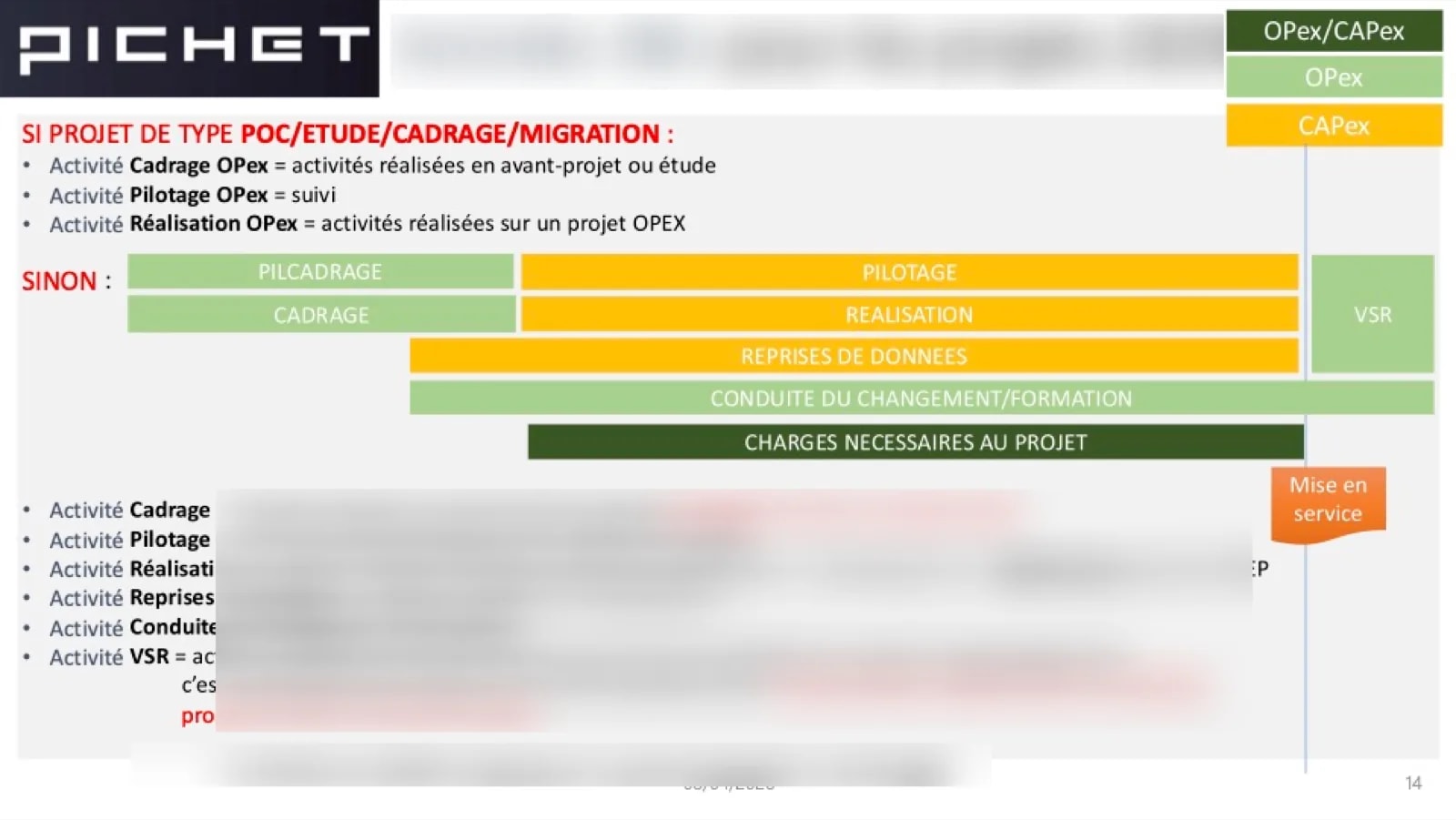
Project governance process diagram
Governance workflow with COPIL, product ownership and vendor coordination