Contact
Let's work together
Intelligent Accounting SaaS Platform

Intelligent Accounting SaaS Platform

Full-stack SaaS platform for accounting, tax management, and financial intelligence - designed for small businesses.

January 2025 - March 2026
14 months
Founder & CTO - Solo Developer
Next.js 16React 19TypeScriptPrisma 7PostgreSQL 16Tailwind CSS 4shadcn/uiBetter AuthVercel AI SDKOpenAIAnthropic ClaudeGoogle GeminiStripeOpen Banking PSD2Teledec EDIDockerVitestPlaywright

Lines of Code

234,292

TypeScript, React, CSS

Features

42

Autonomous modules

API Routes

382

REST endpoints

Database Models

91

Prisma schema models

Presentation

Project definition and scope

The Intelligent Accounting SaaS Platform is a comprehensive, full-stack web application designed for French SMBs and freelancers. It covers the complete spectrum of accounting, tax management, and financial operations that a company must perform to stay legally compliant in France.

Born from a concrète need - managing the accounting of ACCENSEO, a software consulting company.

Domain

Accounting, taxation, financial management, legal obligations for French businesses (PCG, CGI, Code de commerce)

Target Users

SMB directors (B2B), chartered accountants, accounting collaborators - with 6 differentiated roles (Admin, Collaborator, Viewer, Accountant, Accounting, Banking)

Functional Scope
Banking & Open Banking
Invoicing (Sales & Purchases)
Tax Declarations (TVA, IS, CFE...)
Accounting Entries & FEC
AI-Powered Assistant
Bank Reconciliation
Document Management & OCR
Financial Reporting & Forecasts
E-invoicing (DGFIP v3.1)

Objectives, Context, Stakes & Risks

Strategic vision and constraints

Objectives
  • Build a complete accounting platform to autonomously manage ACCENSEO accounting
  • Automate all tax obligations: TVA (CA3), IS, CFE, CVAE, DAS2, PAS - with EDI submission via Teledec
  • Integrate Open Banking for automatic bank transaction synchronization (Nordigen/GoCardless, Bridge, Qonto)
  • Provide an AI layer to assist users with categorization, document analysis, and accounting/tax questions
  • Build a reusable codebase potentially commercializable as a standalone SaaS
Context

The project builds upon a thorough analysis of existing accounting solutions: saved web pages, intercepted API responses (JSON files), extracted JavaScript source code, and systematic screenshots.

A security audit of competing platforms was conducted, identifying several vulnerabilities (IDOR, KYC issues) - this audit informed the secure design of the platform.

A market study of accounting software was conducted, alongside research on Open Banking PSD2 and banking aggregators to choose integration providers. Documentation on electronic invoicing platforms (PDP) was also prepared, including DGFIP v3.1 specifications.

Business Stakes

Accounting Autonomy

Enable ACCENSEO to operate without external accounting provider

Tax Compliance

Meet all filing obligations of a SAS under IS regime, simplified real TVA regime

E-invoicing Ready

Comprehensive PDP documentation prepared for the upcoming 2026-2027 e-invoicing mandate

Identified Risks

Regulatory Complexity

French accounting is extremely regulated (PCG, CGI, Code de commerce). Any error in tax calculations can have direct financial consequences.

Maintenance Burden

With 234,000 lines of code and 91 database models, the project reaches a considerable size for a solo developer. Long-term maintenance requires rigorous architecture.

Regulatory Obsolescence

Tax rules change regularly (TVA rates, IS thresholds, e-invoicing planned for 2026-2027). The platform must be designed for easy adaptation.

The Steps - What I Did

Chronological phases and personal contributions

Phase 1
Ideation & Market Research
Early 2025
  • Identification of the need: manage accounting in-house without external provider
  • Competitor analysis: feature mapping of existing SaaS accounting solutions
  • Definition of the target feature set adapted to a small business (SAS under IS regime)
  • Research on Open Banking PSD2, EDI tax filing, and e-invoicing regulations
Phase 2
Architecture & Technical Setup
Q1 2025
  • Next.js 16 + TypeScript + Tailwind CSS 4 + 25 shadcn/ui components
  • Docker Compose (PostgreSQL 16) + Prisma ORM (91 models)
  • Feature-Driven architecture with 42 autonomous modules
Phase 3
Core Feature Development
Q2 2025 - Q4 2025
  • Authentication: Better Auth with MFA (email, TOTP, SMS), accountant login tokens
  • Banking: 3 providers integration (Nordigen/GoCardless via PSD2, Bridge, Qonto)
  • Invoicing: sales invoices, quotes, purchase invoices with full status workflows
  • Accounting: chart of accounts, journals, entries, general ledger, trial balance, FEC
  • Tax declarations: TVA (CA3), IS, CFE, CVAE, DAS2, PAS with EDI via Teledec
  • Chrome extension: automated tax form filling on impots.gouv.fr
Phase 4
Advanced Features
Q1 2026
  • AI assistant: 3 providers (OpenAI, Claude, Gemini) with contextual help
  • Reporting: dashboard, balance sheet, P&L, SIG, budget, cash flow forecasts
  • Legal: general assemblies, registers, statutory auditor workflows
  • Payroll: payslips, DSN, withholding tax, social contributions
  • Invoice downloader: Node.js microservice for automated invoice retrieval

Actors & Interactions

Team, stakeholders, and collaboration dynamics

Why the human role was critical

This project was built as a human + AI duo. The human developer directs the AI through detailed prompts to generate production-grade code for a complex accounting platform.

An accounting platform handles regulated financial data - tax calculations, bank reconciliations, legal declarations. The AI generates code fast, but it cannot understand French tax law (CGI, PCG), validate accounting accuracy, or make product decisions about what to build. Every feature required deep domain expertise to specify correctly and rigorous verification to avoid financial errors.

Jose DA COSTA - Direction & Expertise (~15-20%)
  • Product vision and feature prioritization for 42 modules
  • Accounting/tax domain expertise (PCG, CGI, TVA, IS, CFE, DAS2)
  • Detailed functional specifications and instruction prompts for each feature
  • Manual code review on every generated file - logic, naming, security
  • Writing verification scripts to validate accounting calculations and tax rules
  • Systematic regression testing after each iteration
  • Security audit of competing platforms
  • Open Banking and e-invoicing regulatory research
Claude Code (AI) - Implementation (~80-85%)
  • TypeScript/React/Next.js code generation (234K+ lines)
  • 42 feature modules with full CRUD and business logic
  • 382 API routes with validation and error handling
  • Prisma schema with 91 models and 63 enums
  • Third-party API integration (Stripe, Open Banking, EDI)
  • UI components with shadcn/ui and responsive layouts
Iterative Development Workflow

Inspired by SDD methodologies: Spec Kit, OpenSpec, BMAD, Kiro (AWS) & Tessl

Results

Impact for myself and for the company

Feature Distribution (42 Features)
Database Model Distribution (91 Models + 63 Enums)
For Me - Skills Acquired & Reinforced

Technical Skills

  • Full-stack TypeScript/React/Next.js at production scale (234K+ lines)
  • Feature-Driven architecture for complex SaaS applications
  • Complex relational data modeling (91 tables, relations, enums)
  • REST API integration (Open Banking PSD2, Stripe, Teledec EDI)
  • Multi-provider AI integration (streaming SSE, structured extraction)
  • Chrome extension development (Manifest V3, content scripts)
  • Application security (OWASP audit, IDOR detection, MFA, RBAC)
  • Web application reverse engineering

Accounting & Tax Domain

  • French General Chart of Accounts (PCG)
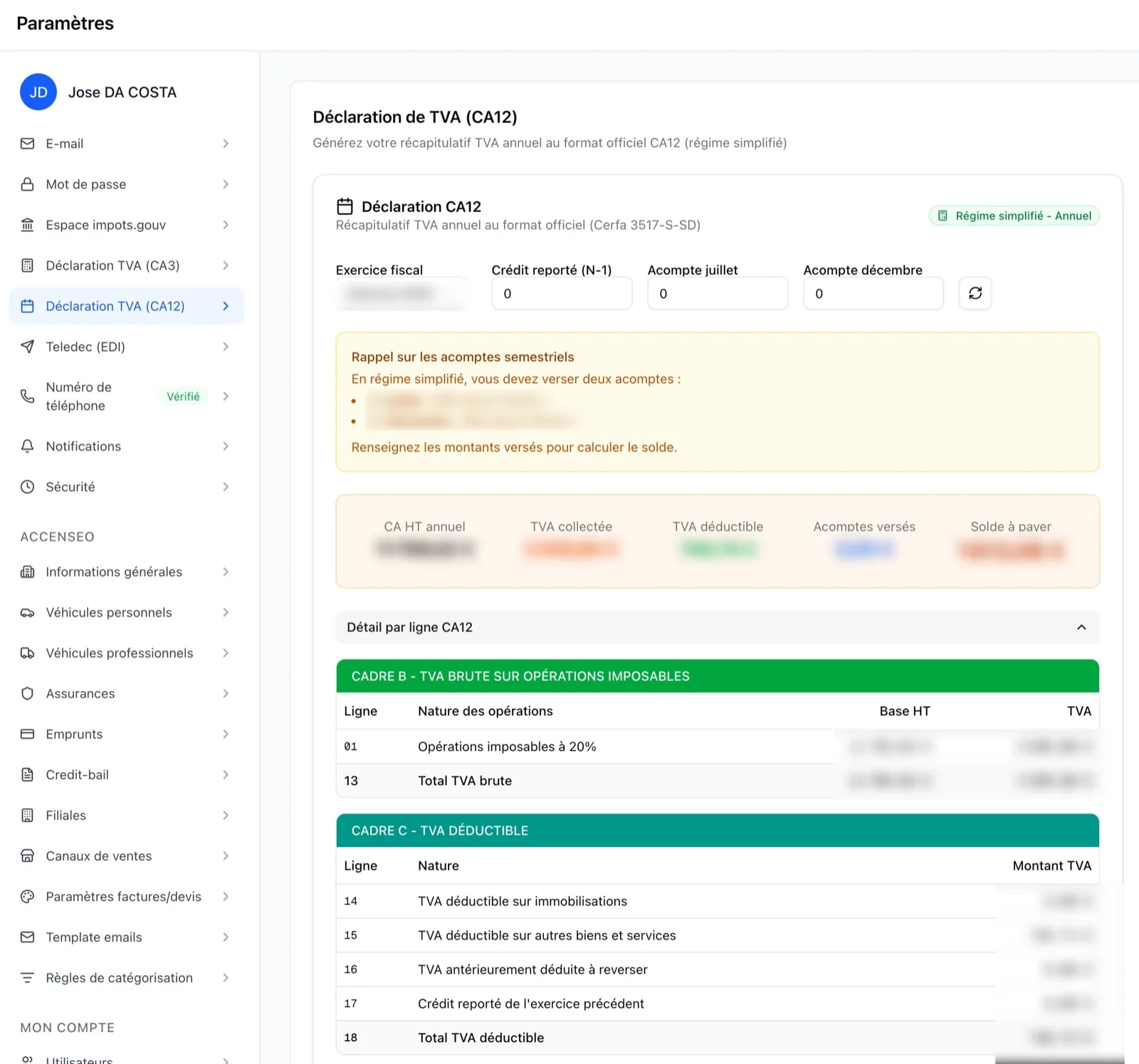
  • TVA regimes and CA3/CA12 declarations with EDI filing
  • Corporate tax (IS - instalments and final payment)
  • Economic contributions (CFE, CVAE)
  • Payroll and social contributions (DSN, PAS)
  • Electronic invoicing standards (PDP, DGFIP v3.1)
  • Company legal obligations (AG, registers, annual accounts)
  • Open Banking (PSD2, STET) - technical and regulatory
For the Company - Business Impact

5 000 EUR/year

Accounting savings

Traditional accountant fees eliminated (5 000 EUR excl. tax/year, excluding payroll)

10

Tax declaration types

Automated via EDI Teledec

Sage

Payroll outsourced

DSN and payroll managed via Sage Business Cloud Paie, partially automated

42

Autonomous modules

Full coverage of automated accounting operations

Delivered Features Summary:

  • Accounting & Entries: Chart of accounts (general, auxiliary, analytical), journals, entries (sales, purchases, bank), general ledger, trial balance, bank reconciliation, FEC (generation, controls, history), closing entries
  • Banking: Multi-bank connections (Nordigen, Bridge, Qonto), automatic transaction sync, AI-assisted categorization, receipt management, invoice-transaction reconciliation
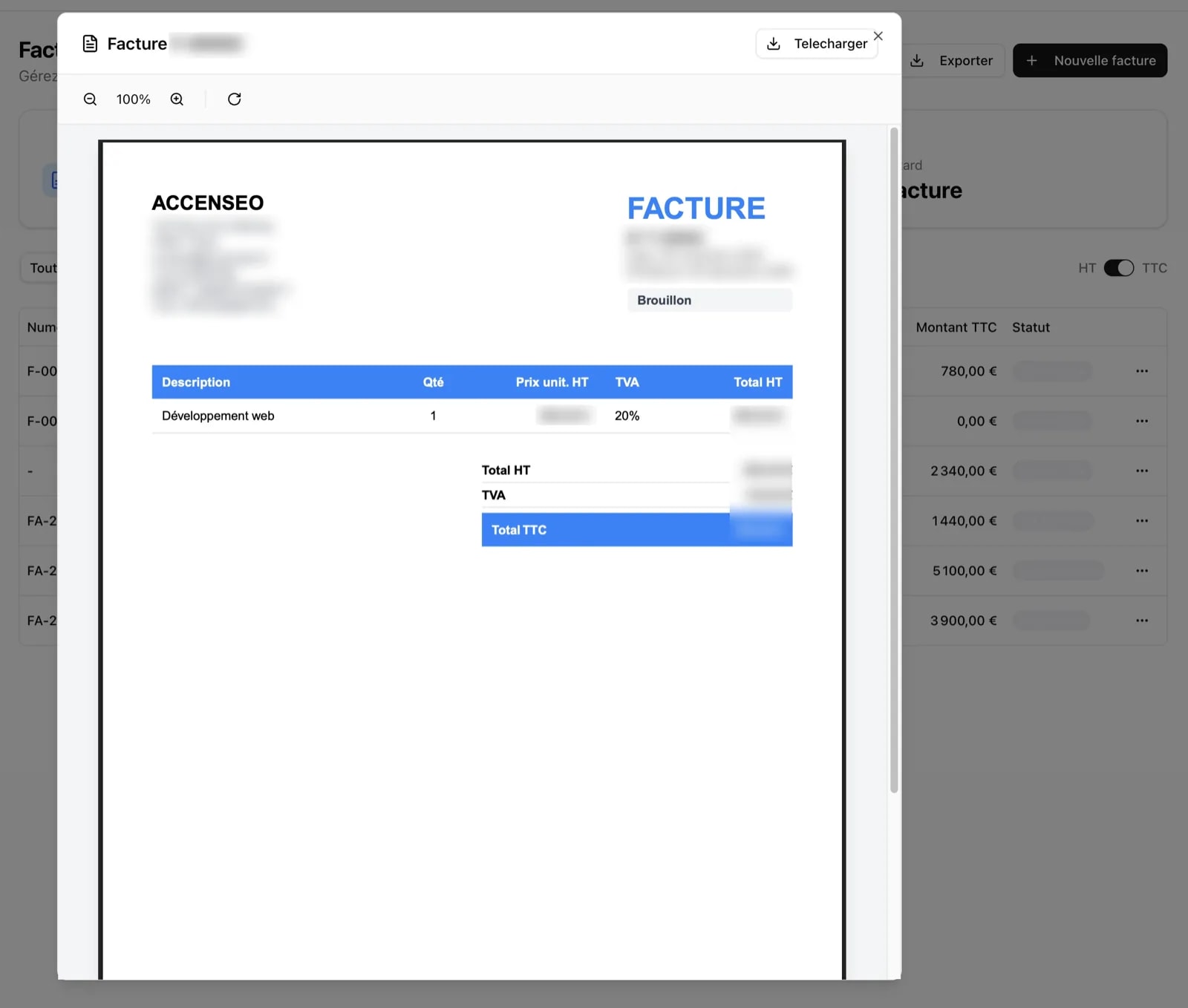
  • Invoicing: Sales invoices (draft, pending, overdue, collected, cancelled), quotes (draft, sent, accepted, declined, invoiced, expired), purchase invoices, PDF generation, credit notes, e-invoicing
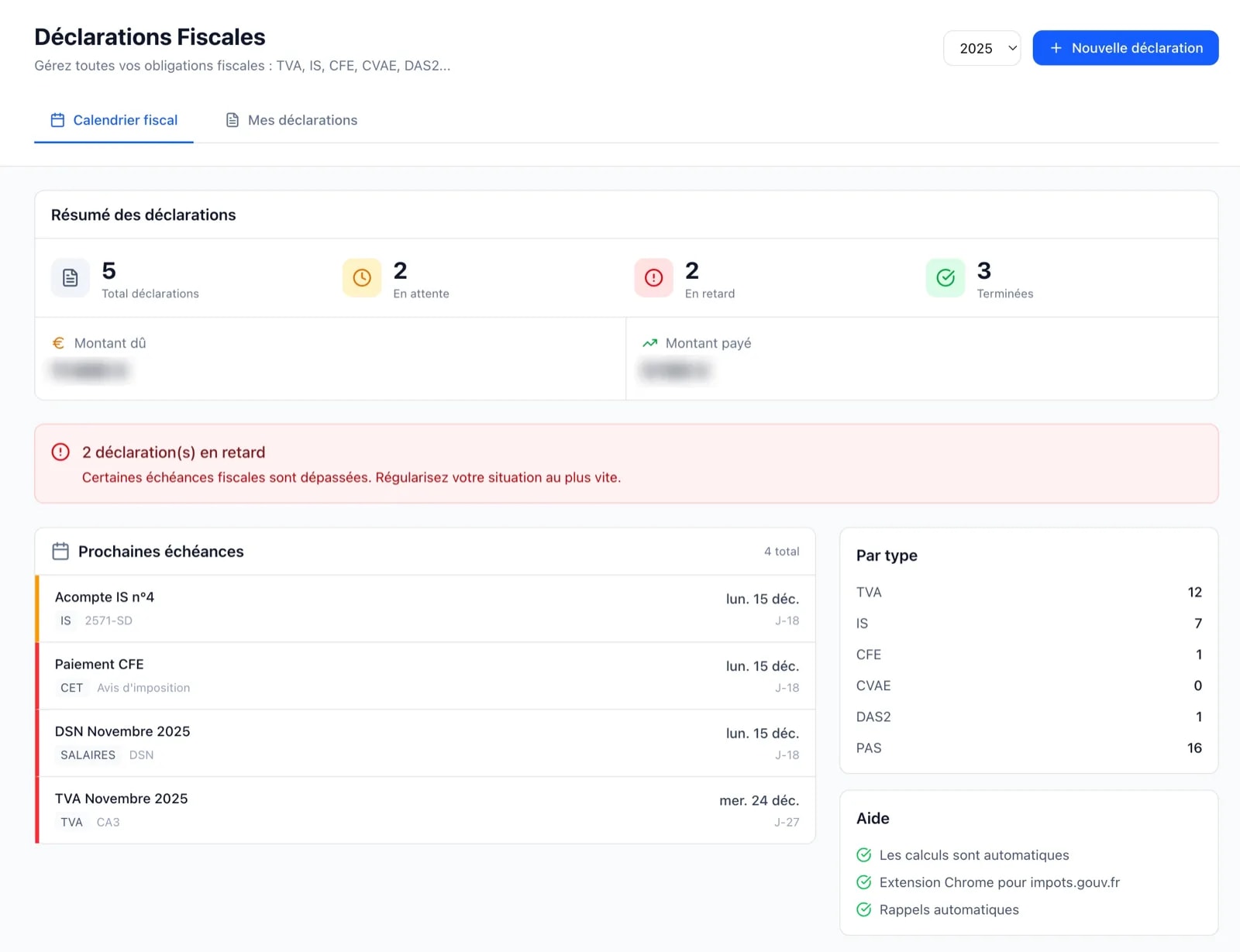
  • Tax: TVA (CA3 monthly/quarterly + simulation), IS (instalments + balance), CFE, CVAE, DAS2, PAS, salary tax, RCM 2777, tax calendar, EDI e-filing via Teledec, Chrome extension for impots.gouv.fr
  • AI: Accounting/tax chat assistant (3 providers), contextual help with detail levels, document analysis with structured extraction (Zod schemas)

Project Aftermath

What happened after delivery and current state

Immediate Future: The platform is still under active development as of March 2026. The latest source file modifications date from March 12, 2026 (API collaborator routes). The focus is on stabilizing core features and preparing for production usage.

Medium-Term Trajectory: Several strategic directions are being explored:

  • Production deployment for ACCENSEO's own accounting needs
  • Electronic invoicing readiness for the upcoming French 2026-2027 mandate - comprehensive PDP documentation (DGFIP v3.1 specifications, semantic annexes, feasibility studies) is already prepared
  • Potential SaaS commercialization - the Feature-Driven architecture with 42 autonomous modules was designed from the start to support multi-tenant operation

The Feature-Driven approach ensures new modules can be added independently without impacting existing functionality, and the multi-provider AI strategy protects against vendor lock-in.

Critical Reflection

Retrospective analysis and lessons learned

Strengths
  • Exceptional functional coverage

    42 features, 114 pages, 382 API routes - near-complete scope of professional accounting software.

  • Clean, scalable architecture

    Feature-Driven approach with 42 autonomous, self-contained modules (components, hooks, services, types).

  • Methodical approach

    Security audit, market study, and coverage analysis before writing any code.

Areas for Improvement
  • Commit history to segment better

    Grouping commits by feature with dedicated branches would have improved traceability and code review.

  • Test coverage to reinforce

    Critical modules (tax calculations, accounting entries, declarations) would benefit from more unit and integration tests.

What I Would Do Differently
  • Regular commits from day one to preserve an exploitable history and enable safe rollbacks
  • Tests from the start (TDD or at minimum tests for tax calculation functions) - the most critical business logic should have been tested as it was written
  • Automatic API documentation (Swagger/OpenAPI) for the 382 routes - this would facilitate future developer onboarding and API consumption
Lasting Lessons

One motivated developer with the right tools can produce enterprise-grade software

234,000 lines of code in ~14 months, alone - a significant accomplishment enabled by AI-assisted development.

Related journey

Professional experience linked to this achievement

Skills applied

Technical and soft skills applied

Image gallery

Project screenshots and visuals

Tax declaration calendar dashboard with upcoming deadlines, late alerts and summary by declaration type
Tax calendar - Declaration deadlines and status tracking
PDF invoice preview modal with Accenseo branded template showing line items, VAT and totals
Invoice preview - PDF generation with custom branding
VAT CA12 annual declaration form with tax breakdown, deductible VAT lines and simplified regime settings
VAT declaration - CA12 annual form with automatic calculations
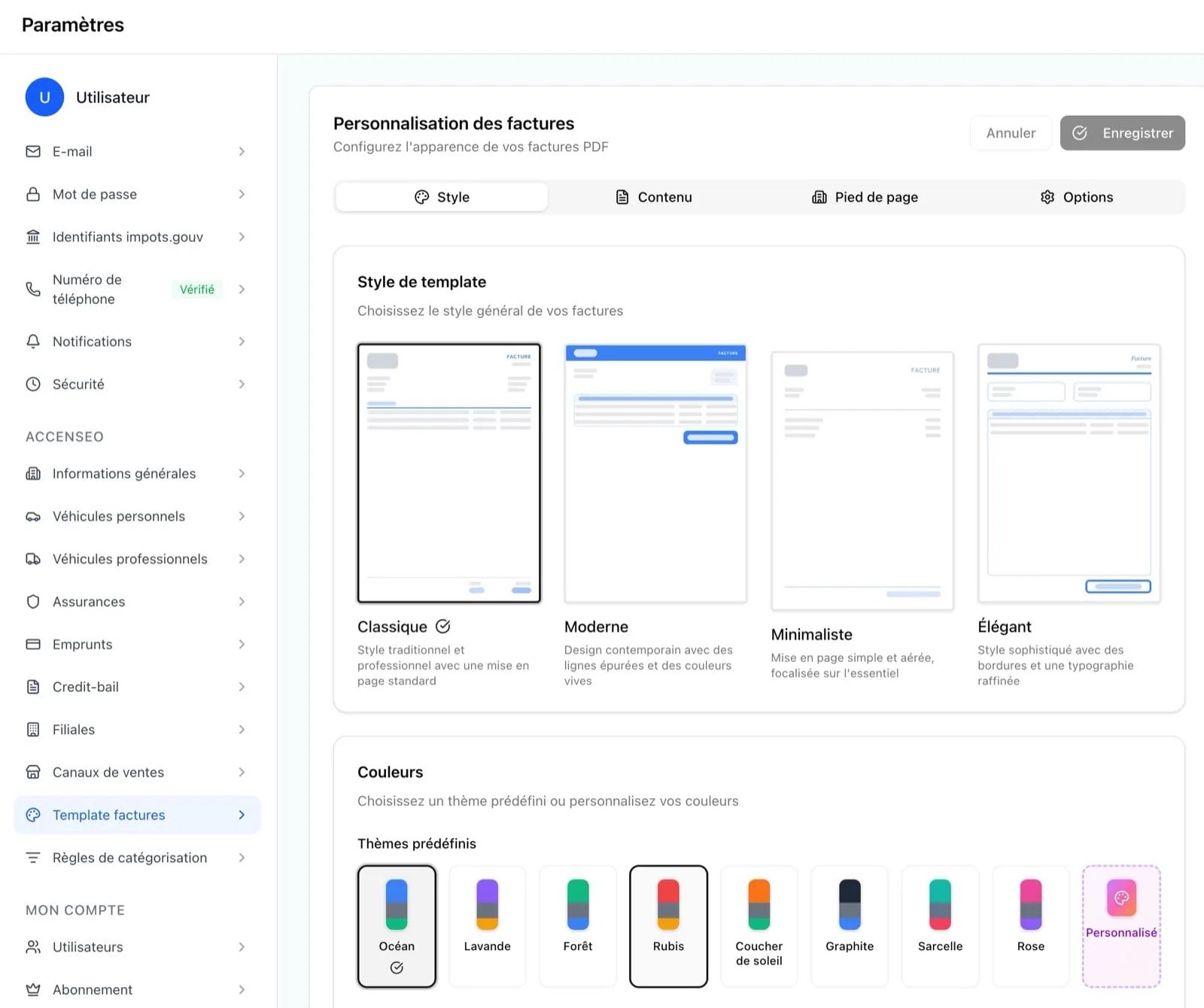
Invoice PDF template customization panel with 4 style presets and color theme picker
Template editor - Invoice style and color customization
Legal document model library with filtering by legal form type showing decision templates for different company structures
Legal models - Document templates filtered by company type