Contact
Let's work together
PSR - Centralized Partner Lead API Platform

PSR - Centralized Partner Lead API Platform

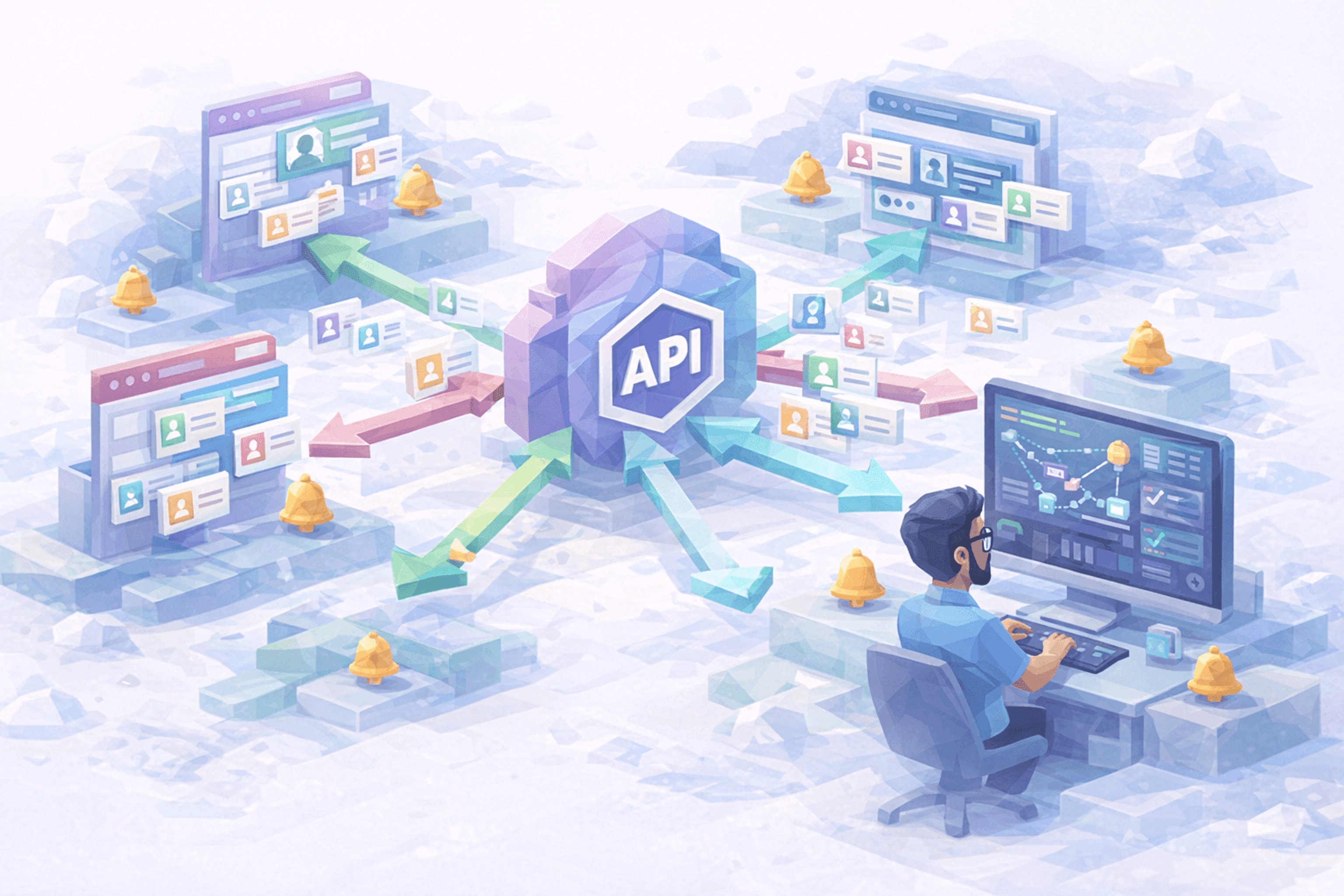
Centralized API platform receiving and routing real estate leads from 9+ external partner portals to CRM Hermes via Adobe Campaign - each partner integration supervised end-to-end, from API specification to production monitoring.

February 2021 - 2024
~3 years
Project Manager / Product Owner - API Platform Owner
REST APIMicrosoft APIMAdobe Campaign v7Dynamics 365AWS EKSKubernetesDockerGitLab CISOFT MonitorJira

Partner APIs

9+

Integrated and maintained

Lead Volume

~43K/day

~1 lead every 2 seconds peak

Lead Loss Rate

~0%

Zero major loss incidents

Onboarding Time

weeks -> days

Reduced from weeks to days

Presentation

Project definition and scope

The PSR (Pichet Services Repository) is the centralized API platform of the Groupe Pichet for receiving and routing real estate leads from external partner portals. Every real estate portal or marketing partner generating prospects for Pichet connects to the PSR via a dedicated API endpoint, which normalizes data and transmits it to the CRM Hermes (Dynamics 365) through Adobe Campaign (Neolane) and the Microsoft API Manager (APIM).

As Lead Developer and API Platform Owner, I supervised the integration of each new partner API and the platform's functional evolutions, coordinating with the marketing teams and external technical service providers. The PSR is a business-critical system: every lead lost or incorrectly routed translates directly into a missed sales opportunity in a highly competitive real estate market.

Nature

Centralized REST API platform for multi-partner lead reception, normalization, and CRM routing

Domain

Real Estate / PropTech - Lead Management (B2B internal + B2B external partners)

Functional Scope
  • Expose standardized REST APIs for each lead generation partner
  • Normalize lead data (name, email, phone, program, source) regardless of partner format
  • Route leads to CRM Hermes via Adobe Campaign (Neolane) for commercial follow-up
  • Detect anomalies: blocked leads, duplicates, format errors
  • Manage API credentials and access via Microsoft API Manager (APIM)
  • Monitor lead quality with SOFT Monitor alerts and email notifications
System Architecture
PSR - System Architecture Overview
Key Architecture Decisions

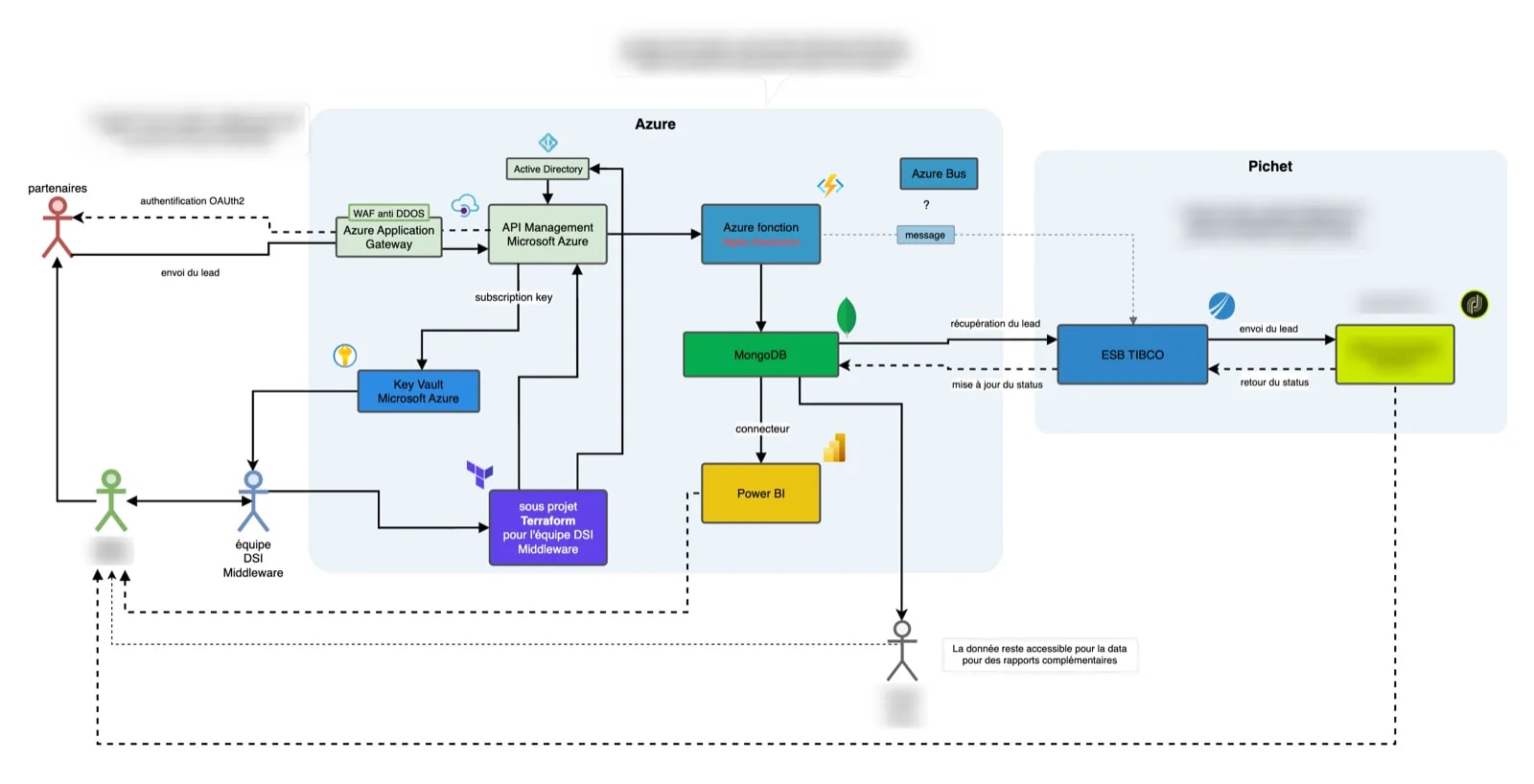
Microsoft APIM as API Gateway

Chosen over a custom reverse proxy to centralize credential management, throttling, and access control for 9+ external partners. APIM provided out-of-the-box OAuth, rate limiting, and per-partner analytics - building this in-house would have taken months and introduced security risks.

Adobe Campaign as routing intermediary (not direct CRM injection)

Leads pass through Adobe Campaign (Neolane) before reaching the CRM to benefit from its enrichment and deduplication capabilities. Direct CRM injection was faster but would bypass the existing commercial workflow and lose the data enrichment layer the marketing team depended on.

One dedicated endpoint per partner (not a generic endpoint)

Each partner has unique data formats, required fields, and validation rules. A generic endpoint would have required complex runtime configuration and made debugging partner-specific issues harder. Dedicated endpoints keep the normalization logic isolated and testable per partner.


Objectives, Context, Stakes & Risks

Strategic vision and constraints

Objectives
  • 1Expose standardized APIs for each lead generation partner with consistent data contracts
  • 2Normalize all lead data regardless of partner-specific format or protocol
  • 3Route leads reliably to CRM Hermes via Adobe Campaign for commercial pipeline tracking
  • 4Supervise lead flow quality: anomaly detection, blocked leads, duplicate filtering
  • 5Manage credentials and API access centrally via Microsoft API Manager
Context

The project was initiated within the SI Marketing team at Groupe Pichet, where the growing number of external lead sources (real estate portals, advertising partners, marketing platforms) created the need for a single entry point to centralize and normalize incoming leads before routing them to the commercial CRM.

The existing landscape was fragmented: each partner had its own data format, authentication method, and delivery protocol. Without the PSR, integrating a new partner required custom development on the CRM side - an unsustainable approach as the partner ecosystem grew. The PSR was designed to absorb this heterogeneity and provide a clean, standardized interface to the downstream systems.

Stakes

Leads are the lifeblood of commercial activity in real estate. Each lead represents a potential buyer, and the market is fiercely competitive: losing a lead to a routing error or a delayed integration means giving that prospect to a competitor. With 9+ partners generating leads simultaneously, the PSR became the single most critical data pipeline feeding the commercial teams' daily pipeline.

The commercial impact was direct and measurable: a partner API down for a single day could mean dozens of lost prospects - each worth potentially hundreds of thousands of euros in property sales.

Security & RGPD Compliance
  • Per-partner credential isolation via APIM: each partner receives unique API keys with scoped permissions - no partner can access another partner's data or endpoints
  • Systematic API key rotation policy enforced through APIM lifecycle management - credentials renewed on schedule to limit exposure window
  • RGPD compliance for personal data: leads contain name, email, phone - data transmitted over HTTPS only, no persistent storage in intermediate layers, CRM as sole data repository
  • Security audit conducted in February 2023 covering PSR infrastructure, APIM configuration, and Adobe Campaign integration - resulting in hardened access controls and updated firewall rules
  • Input validation at gateway level: format checks, payload size limits, and malformed request rejection before data reaches internal systems
Risks

Lead Loss

Any API failure or routing error directly translates into lost commercial prospects - unrecoverable in a competitive real estate market.

Format Heterogeneity

Each partner sends data in its own format with different required fields, validation rules, and encoding - making generic processing impossible.

Credential Sprawl

Managing API keys, tokens, and access for 9+ partners across APIM requires rigorous credential lifecycle management.

Adobe Campaign Dependency

The migration from Adobe Campaign v6 to v7 required URL changes across all partner configurations - a single misconfiguration could silently drop leads.

Lead Lifecycle Pipeline
End-to-end lead lifecycle from partner source to CRM

The Steps - What I Did

Chronological progression of the project

Phase 1
Platform Foundation & First Partner
Feb 2021
  • Integrated the first partner API: VotreAppartementNeuf (KESD-20158)
  • Established the PSR platform architecture: reception, normalization, routing
  • Configured Microsoft API Manager credentials for CRM Hermes and GED v2 (KESD-24176, KESD-25889)
  • Set up monitoring with SOFT Monitor and email alert notifications
Phase 2
Rapid Partner Onboarding
Jun - Dec 2022
  • Integrated SeLoger API (PSR-48) - major real estate portal
  • Integrated Myopla API (PSR-47, KESD-55205) - marketing partner
  • Integrated Cooper Advertising (PSR-52) - deployed in pre-production
  • Integrated Akrivia Leads (PSR-58, KESD-66929) and Visibilitie (KESD-67023)
  • Integrated Clovis API (PSR-60, KESD-68919) - December 2022
  • Added "Commentaire" and "Apport" fields to the API (PSR-54, KESD-61307)
Phase 3
Stabilization & Evolutions
Jan - Feb 2023
  • Integrated Fine Media API (KESD-71757) - final documented partner
  • Fixed lead status codes and blocked lead handling (PSR-51)
  • Migrated all URLs from Adobe Campaign v6 to v7 (PSR-56)
  • Investigated and resolved Investimeo PSR vs Neolane anomaly (PSR-59)
  • Conducted security audit meeting for PSR infrastructure (Feb 2023)
Phase 4
Architecture Refactoring
2024
  • Led the major PSR refactoring: new SeLoger API architecture
  • Redesigned Adobe Campaign API integration layer
  • Improved error handling, retry logic, and observability
  • Documented the full partner onboarding playbook for team continuity
Integrated Partner APIs
PartnerJira TicketPeriodStatus
VotreAppartementNeufKESD-20158Feb 2021Active
SeLogerPSR-48Jun 2022Active
MyoplaPSR-47Jun 2022Active
Cooper AdvertisingPSR-52Oct 2022Pre-prod
Akrivia LeadsPSR-58Nov 2022Active
VisibilitieKESD-67023Nov 2022Active
ClovisPSR-60Dec 2022Active
Fine MediaKESD-71757Jan 2023Active
InvestimeoPSR-592022Investigated
Partner Integration Timeline
Partner Integrations Per Year
Partner Onboarding Process
Step-by-step process for each partner integration

The Actors - Interactions

Teams, stakeholders and collaboration

The PSR project operated at the intersection of marketing, IT, and external partners. Each new partner integration required coordinating between the partner's technical team (for API specifications), the SI Marketing team (for business validation), and the CRM team (for lead routing confirmation). I served as the single technical point of contact for all partner integrations.

Technical Leadership & Knowledge Transfer
  • Authored the complete partner integration playbook on Confluence - a step-by-step guide enabling any team member to onboard a new partner autonomously, from APIM credential setup to production monitoring
  • Conducted internal technical meetups on API integration patterns, sharing lessons learned from partner onboarding with the broader SI team
  • Produced and maintained API documentation across 5 versions (v1 to v5), serving as the reference for both internal teams and external partners
  • Trained external partner technical teams on PSR API specifications, authentication flows, and testing procedures during each onboarding cycle
  • Defined code quality standards for the PSR codebase: validation patterns, error handling conventions, and logging practices adopted across the SI Marketing team

Franck C.

N+1 Manager

Validated each partner integration, approved production deployments and prioritized the backlog of partner onboarding requests.

Cyril M.

SI Marketing Team

Coordinated with external partners on technical specifications, data formats, and business requirements for each new API.

Emilie D.

Kariba Team

Maintained PSR Confluence documentation pages, contributed to knowledge base and partner integration guides.

External Partners

SeLoger, Myopla, Cooper, Akrivia, Clovis, Fine Media...

Provided API specifications, test credentials, and validated integration tests before production go-live.

The Results

Impact for me and for the company

For Me
  • Deepened expertise in API integration patterns: authentication, normalization, routing, error handling at enterprise scale
  • Mastered the Microsoft API Manager platform for credential and access management
  • Developed strong coordination skills working at the intersection of marketing, IT, and external partners
  • Gained experience in lead management domain: data quality, deduplication, CRM routing strategies
  • Built confidence in owning a business-critical platform where every failure had direct commercial impact
For the Company
  • 9+ partner APIs integrated → diversified lead acquisition channels feeding the commercial pipeline
  • Centralized lead entry point → eliminated the need for custom CRM-side development per partner
  • Standardized data format → consistent lead quality regardless of source, improving commercial team efficiency
  • Real-time monitoring → immediate detection of anomalies, reducing lead loss to near-zero
  • Scalable architecture → new partner onboarding reduced from weeks to days with the PSR playbook
  • 2024 refactoring → future-proofed the platform with improved SeLoger and Adobe Campaign integrations
Monitoring & Observability Strategy
  • SOFT Monitor dashboard with real-time KPI gauges tracking lead flow health across all 9+ partners simultaneously
  • Automated email alerts triggered on lead processing anomalies: blocked leads, format validation failures, partner API timeouts, and routing errors
  • Per-partner flux tracking: each partner API has individual monitoring with transaction logs, success/failure rates, and volume trends
  • Proactive anomaly detection: format changes from partners (field additions, encoding shifts) caught at validation layer before impacting downstream systems
  • Production incident response: monitoring enabled sub-minute detection of partner outages, reducing silent lead loss from days to minutes
Skills Demonstrated

Technical Skills

  • API Design & Integration Patterns
  • System Architecture (Gateway, Mediation, Routing)
  • API Security (APIM, OAuth, credential lifecycle)
  • Monitoring & Observability (SOFT Monitor, alerting)
  • Data Normalization & Quality Management
  • Migration Planning (Adobe Campaign v6 to v7)
  • CI/CD & Deployment (GitLab CI, AWS EKS, Kubernetes)

Leadership & Soft Skills

  • Multi-stakeholder Coordination (marketing, IT, external partners)
  • Technical Communication with non-technical teams
  • Platform Ownership (single point of accountability)
  • Knowledge Transfer & Documentation (playbooks, API docs v1-v5)
  • Decision-making under Business Pressure
  • Internal Technical Meetups & Team Training
Lead Flow Stages (% retention)
Jira Ticket Distribution
Partner Status Breakdown

The Aftermath

What happened after delivery

After the initial wave of partner integrations (2021-2023), the PSR entered a stabilization and optimization phase. The platform continued to process leads daily from all integrated partners, with monitoring alerts catching occasional anomalies (format changes from partners, API deprecations, credential renewals).

The 2024 refactoring marked a significant architectural evolution: the SeLoger API integration was redesigned, and the Adobe Campaign API layer was modernized. This refactoring demonstrated that the original architectural choices were sound but needed updating as both internal requirements and external partner APIs evolved.

As of today, the PSR remains the single entry point for all external lead acquisition at Groupe Pichet. The partner onboarding playbook I documented enables the team to integrate new partners autonomously, ensuring knowledge continuity beyond my direct involvement.

Technical Effort Distribution

My Critical Reflection

Lessons learned and honest assessment

What Worked Well
  • The incremental partner-by-partner approach allowed us to validate each integration thoroughly before moving to the next - zero major lead loss incidents during onboarding
  • Using Microsoft APIM as a gateway layer provided clean credential isolation and throttling - partners never had direct access to internal systems
  • The SOFT Monitor integration gave us real-time visibility into lead flow health, catching issues within minutes instead of days
  • The normalization layer successfully absorbed the heterogeneity of 9+ partner formats into a single clean CRM-compatible schema
What Could Be Improved
  • The Adobe Campaign v6 to v7 migration revealed a fragility: URL changes required manual updates across all partner configurations - a configuration management tool would have simplified this
  • Lead deduplication logic could have been more sophisticated - the basic matching was sufficient but edge cases (phone format variations, accent handling) required manual review
  • End-to-end integration testing was manual and time-consuming - automated partner simulation would have accelerated the onboarding cycle
  • Documentation was sometimes written after the fact rather than during development - earlier documentation would have eased knowledge transfer
Trade-offs & Technical Arbitrages

Accepted technical debt on deduplication logic in Phase 2

Business needed 6 partners onboarded in 6 months. Investing in a sophisticated matching engine would have delayed partner integrations by 2-3 months. Basic deduplication was "good enough" for the volume - we planned the proper implementation for the 2024 refactoring phase.

Refused to bypass Adobe Campaign for "direct CRM injection" requested by a partner

A partner wanted faster lead delivery by skipping the Neolane enrichment layer. I refused because it would have created a parallel data flow outside our monitoring, breaking lead traceability and the commercial team workflow. The 200ms latency was acceptable.

Chose per-partner endpoints over a configuration-driven generic endpoint

More code to maintain per partner, but each integration is isolated: a bug in one partner normalization never affects others. This trade-off proved critical when SeLoger changed their format mid-contract - only their endpoint needed updating.

No asynchronous retry queue in Phase 1

Synchronous processing was simpler to monitor and debug during the platform stabilization period. Async retry would have added complexity before we fully understood the failure patterns. We added retry logic in Phase 4 once patterns were clear.

Lessons Learned
  • In lead management, speed matters as much as accuracy - a fast but slightly imperfect routing beats a slow but perfect one, because leads go cold quickly
  • API gateway layers (like APIM) are essential when dealing with multiple external partners - they provide security, monitoring, and credential isolation in a single layer
  • Partner-by-partner validation with business teams is non-negotiable - even technically identical integrations can have different business expectations
  • A well-documented onboarding playbook is the best investment for long-term team autonomy - the PSR playbook outlived my direct involvement on the project

Related journey

Professional experience linked to this achievement

Skills applied

Technical and soft skills applied

Image gallery

Project screenshots and visuals

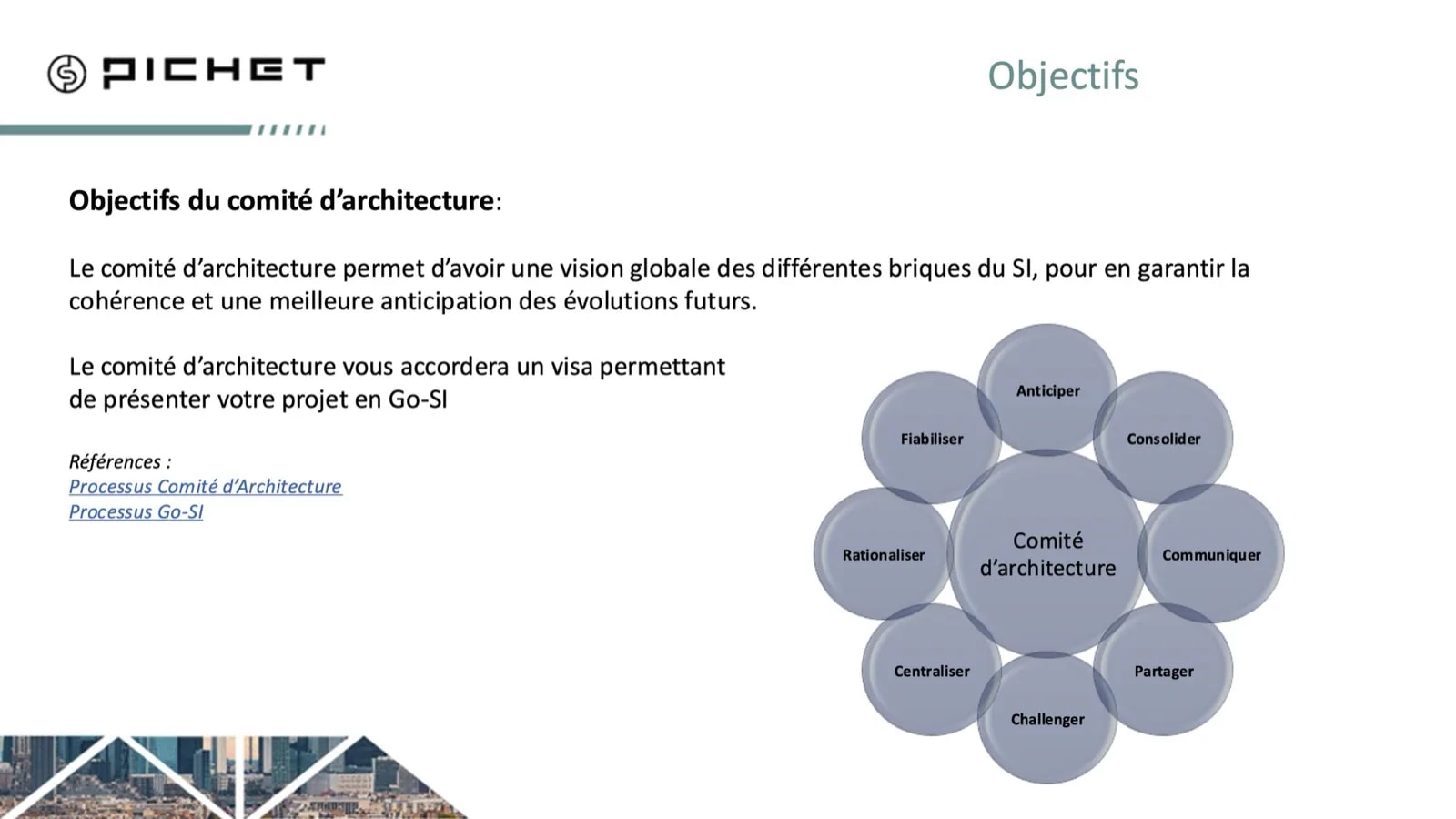
Groupe Pichet architecture committee presentation showing objectives, governance process and IS vision diagram
Architecture committee - Objectives and governance
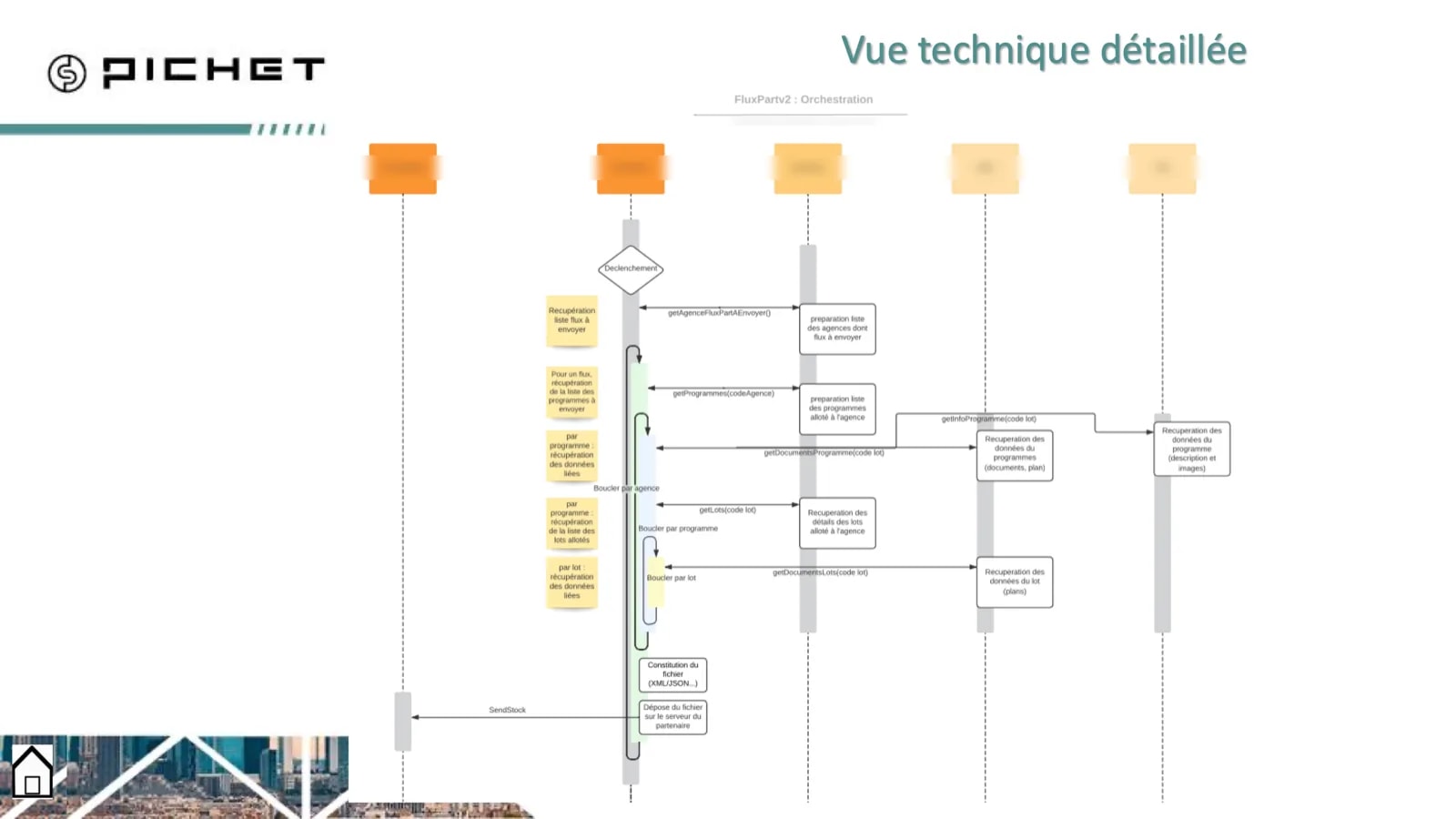
Detailed technical flow diagram showing partner data integration sequence with decision points and API calls
Technical flow - Partner data integration sequence
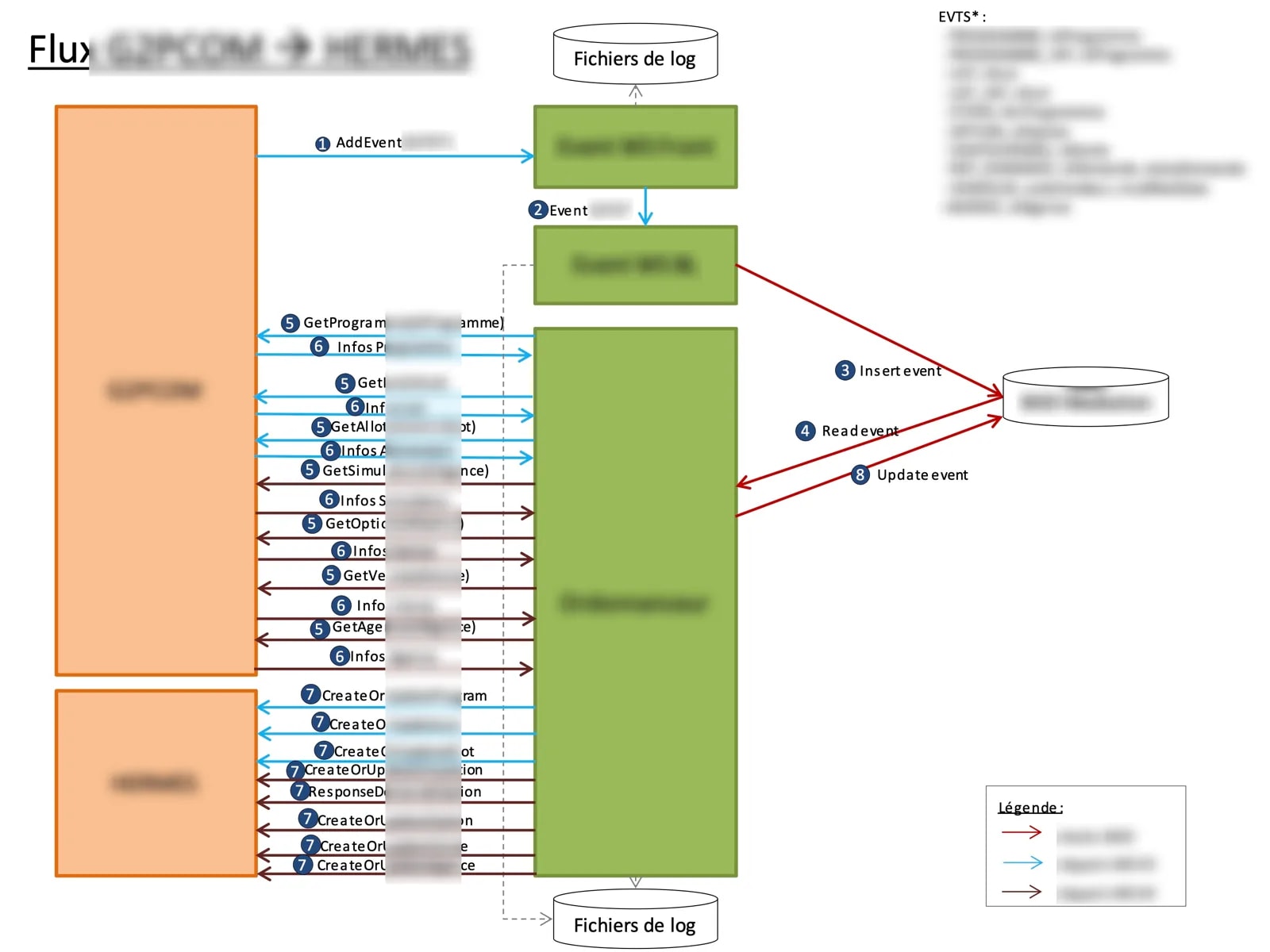
G2PCOM to HERMES data flow diagram showing API calls, event processing and database synchronization
Data flow - G2PCOM to HERMES event processing
Azure API Management architecture showing Active Directory auth, API Gateway, MongoDB, Power BI and Terraform infrastructure
Architecture - Azure API Management platform