Engineering Manager · Project Manager / Product Owner · Technical Lead
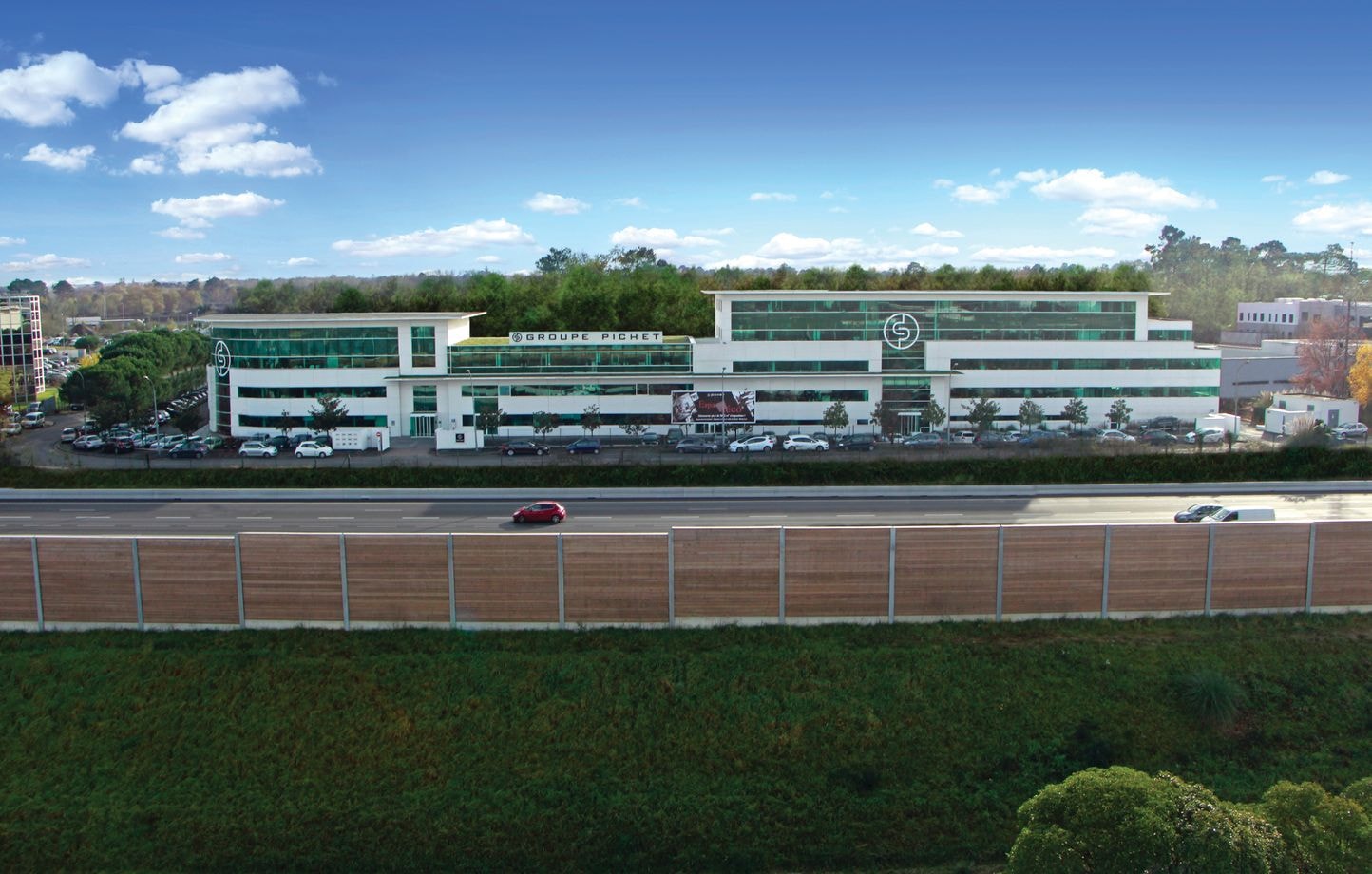
Groupe Pichet

Groupe Pichet is a family-owned real estate group headquartered in Pessac, with 1,400+ employees - a mid-size enterprise covering the entire real estate value chain: new-build development, rental investment, property management, hospitality (All Suites, Mondrian/Ennismore), student residences and vineyards.
The 100-person IT department (50% outsourced), led by Jean-Luc O., was structured into divisions: Marketing IS/IT Factory, Middleware/ESB, Cross-functional IS, Finance/HR IS. The mid-size complexity meant dealing with interoperability between 20+ heterogeneous systems (ERP Qualiac/SAGE, CRM Hermes, PIM Akeneo, DAM Bynder, ESB TIBCO, treasury KYRIBA, PMS MEWS, identities IGA), standardizing methods across divisions, and governing sensitive real estate data.
My 5-year journey in this group was marked by continuous growth: Technical Lead (code, plugins, Kubernetes infrastructure) to Project Manager (SaaS migration, 160-200K EUR/year budget, vendor negotiations, steering committees) then Engineering Manager (managing 1-7 developers, strategic roadmap, IS governance).

1 400+
Employees
100
IT Staff
20+
Interconnected systems
5
Business lines
- •Managed cross-functional teams of up to 7 people across a portfolio of 6 concurrent projects with 100+ integration flows and 932+ Jira tickets
- •Growing budget responsibility aligned with scope: from 160-200K EUR/year (PIM/DAM/SaaS tools) to ~370K EUR/year (enterprise integration, TIBCO license ~100K, Square IT TMA, ESB contractors)
- •Worked transversally with all group departments: development, property management, hospitality, finance, treasury, HR, marketing, security - daily interaction with ~80 people
- •Led the digital transformation of PIM Akeneo, DAM Bynder and enterprise application integration (TIBCO ESB) systems across a 1,400+ employee group
- •Progressed from Technical Lead to Engineering Manager over 5 years, with continuous growth: code → product → project → team management
Team management, strategic roadmap and IS governance
Direct management of 1-7 ESB developers, leading 6 concurrent projects (100+ flows, 932+ Jira tickets), strategic decisions (ESB roadmap 2023-2024, iPaaS evaluation), standardizing practices across IT divisions, structured knowledge transfer. Daily interaction with ~80 people across all group departments.
Product ownership, budgeting and stakeholder management
Scope expanded beyond code: PIM cloud migration (Akeneo SaaS), managing a 160-200K EUR/year budget, negotiating vendor contracts (Akeneo 45K EUR, Bynder 36.9K EUR), leading steering committees with 5+ departments. PSPO (2021) and SAFe PO/PM (2022) certifications to formalize this evolution.
Individual contributor and technical authority
Took ownership of the PIM/DAM scope, developed custom Akeneo plugins, managed 30+ feature/hotfix branches on GitLab with Master access, conducted code reviews for DnD and Kariba teams. Benchmarked and deployed DAM Bynder. Managed Kubernetes infrastructure (k8s). The trigger for transition: full technical mastery of the Marketing IS created a need for product ownership that no one else could fill.
Budget scope evolution throughout the career progression at Pichet.
| Item | Technical Lead | Project Manager | Eng. Manager |
|---|---|---|---|
| Akeneo PIM Enterprise | - | 45-60K | 55K |
| Bynder DAM Brand Portal | - | 36,9K | 37K |
| TIBCO BusinessWorks (via Square IT) | - | - | ~100K |
| CI HUB / PlayPlay / BrightCove / LucidPress | - | ~37K | - |
| TMA Square IT (ESB / SOFT Monitor) | - | - | 80K |
| ESB dev contractors (RS2I + others) | - | - | 60K |
| Argo / Activo / PIM contractors | - | ~17K | - |
| iPaaS audits (Enioka, RS2I) | - | - | ~38K |
| Total EUR HT / year | - | 160-200K | ~370K |
+ Cloud infrastructure (Docker/Kubernetes): 18K EUR/month (216K EUR/year) - OPEX shared across IT divisions.
Evolution of decision domains throughout career progression at Pichet, showing the widening scope of responsibility.
| Domain | Technical Lead | Project Manager | Engineering Manager |
|---|---|---|---|
| Technical architecture | Decides | Validates | Challenges (HR/budget impact) |
| Team composition | - | Proposes | Decides (with N+1 then CIO) |
| Backlog priority | Contributes | Decides | Protects capacity |
| Vendor budget | - | Signs purchase orders | Co-decides (with N+1) |
| Roadmap | - | Executes | Proposes and drives |
| Code quality | Decides (code reviews) | Tracks KPIs | Defines standards |
| Recruitment | - | Expresses the need | Selects and onboards |
| Incident management | Resolves | Coordinates | Incident Commander (P0) |
| Agile ceremonies | Participates | Facilitates (COPIL/COPROJ) | Creates and facilitates (Sprint) |
| Technical debt | Identifies | Arbitrates | Reserves 30% of sprint |


Engineering Manager · enterprise application integration
Engineering Manager - Enterprise Application Integration
Groupe Pichet's ESB (Enterprise Service Bus) platform is the backbone of the information system. Built on TIBCO BusinessWorks 6, it orchestrates all data flows between the group's 20+ business applications: accounting ERP (Qualiac/Cegid XRP), finance (SAGE), treasury (KYRIBA), hotel PMS (MEWS), real estate management (PRIMPROMO), CRM (Hermes), invoice digitization (ESKER), digital identities (IGA), HRIS (FOEDERIS), fleet management (WINFLOTTE), and many others.
In this role, I interfaced with every department of Groupe Pichet (~1,400 employees): real estate development, property management, hospitality (All Suites, Radisson), finance, treasury, HR, marketing, security, fleet management. Each flow represents a critical business process - an ESB outage blocks accounting entries, student billing, CRM leads, or price updates on websites.
On a daily basis, I interacted with ~80 people on completely different topics. Within a 100-person IT department with 50% outsourcing, I created and led the middleware team's Agile ceremonies (Daily Enterprise Integration standup, Sprint Planning, Review, Retrospective) with a team of 1-7 ESB developers.
Over my 5 years in the group, I went through 5 restructurings and 4 CIO changes. Change management, reorganization, and stakeholder management were permanent themes throughout this assignment. Despite this instability, I maintained service continuity across all critical group flows.
- •Managed a team of 1-7 ESB developers (Mulamba K., Achraf L., Melissa B. and Square IT/RS2I contractors), with Daily standup, Sprint Planning/Review/Retrospective
- •Managed 100+ ESB TIBCO BusinessWorks flows interconnecting 20+ business applications: Qualiac (accounting ERP), SAGE, MEWS (hospitality), KYRIBA (treasury - 3 lots), TITAN, EMMA, IGA, D-Edge, NEEDOCS
- •Supervised PIM Akeneo, DAM Bynder, content syndication and lead acquisition tool (PSR) portfolios
- •Led 6 concurrent projects managing 100+ integration flows, with 932+ Jira tickets on the dedicated ESB space
- •Drove strategic decisions: ESB roadmap 2023-2024, iPaaS solution evaluation (Middleway SAS, RS2I/TIBCO Cloud), structured knowledge transfer before departure
- •Standardized integration practices across IT divisions (Marketing IS, Middleware, Cross-functional IS, Finance/HR IS): established flow documentation standards, connector quality controls and production deployment validation processes
~370K EUR/yr
Total scope budget (licenses + contractors + tools)
~20 → 100+ flows
Production flows on arrival to 100+ on departure (~70 new flows/year)
~30% sprint
Time allocated to tech debt and Run (sanctified Build/Run ratio)
18K EUR/mo
Cloud Docker/Kubernetes infrastructure OPEX
Management principles applied daily with the middleware team, in an ETI context of 1,400 employees with 50% outsourcing.
Individual sessions focused on career development, personal blockers and bidirectional feedback. Project tracking happens in ceremonies, not in 1:1s.
Systematic protection of 30% sprint capacity for technical debt and Run. Direct negotiation with stakeholders to defend this ratio against feature requests.
Every developer owns their flows in production. No separation between Build and Support teams - it drives accountability and improves code quality.
After every major ESB incident (QUALIAC, KYRIBA, MEWS), root cause analysis without blame. Confluence documentation, corrective actions and recurrence prevention.
Real workload estimation: theoretical capacity - (leave + training + on-call + Run) = available Build capacity. Quarterly adjustment of internal/external mix (1-7 devs).
The TIBCO BusinessWorks 6 ESB platform, while stable, was a structural bottleneck for IT agility. Each new flow required weeks of development, license costs were among the highest on the market (~100K EUR/year), and the monolithic architecture prevented any rapid scalability.
- Launched a formal evaluation of iPaaS alternatives with two vendors: Middleway SAS (David Grospelier, September 2022) and RS2I/TIBCO Cloud (Joseph Khouri, October 2022)
- Commissioned an external study by Enioka: full audit of the integration ecosystem (51-page report), mapping of 47 existing flows, 186-day migration estimate, presented in June 2023
- Delivered multiple presentations to the steering committee and CIO advocating for a modern iPaaS platform (Azure Integration Services, TIBCO Cloud, MuleSoft) - backed by TCO analysis, time-to-market gains and accumulated technical debt
- Drafted a transition roadmap including cost estimates, batch migration planning by flow group and target platform selection criteria
The project did not materialize before my departure in January 2024. A few months later, the teams initiated the implementation of a modern integration platform - this groundwork of conviction and preparation proved to be a precursor that accelerated the final decision.
Processes built from scratch to structure the middleware team and industrialize integration flow delivery.
Daily standup created in May 2022 to coordinate ESB developers on active flows, blockers and incidents. First Agile ceremony for the middleware team.
Standardized method to estimate each new integration flow workload. First formal estimate: EMMA_QUAL_01 at 3,375 EUR (7.5d dev + 2.5d coordination).
Sprint Planning, Review and Retrospective progressively established. Sprint Review with multi-project backlog presentation, complexity qualification and planning.
Bi-monthly project committee for full integration portfolio tracking. Structured reporting to Claude D. (N+1) and IT leadership.
Strict criteria imposed on contractors: mandatory code review, flow documentation, staging tests, functional validation before merge.
3-month handover process before departure: 10+ dedicated sessions (PIM, DAM, PSR, Ligneurs, ESB), exhaustive Confluence documentation.
Built and drove the annual enterprise integration roadmap, validated in steering committees with IT leadership and business departments. The roadmap covered all group interconnection needs over a 12 to 24-month horizon.
52
Planned flows / year
48 new flows + 4 evolutions of existing flows
2.33
FTEs required / year
Full-time equivalents calculated on 400 workdays
503
Workdays / year
Build (400d) + Monitoring (141d) + Recurring TMA (88d/yr)
6+
Departments involved
Accounting-Finance, Real Estate, Hospitality, HR, Customer Journey, Middleware
Needs by business department
Accounting-Finance
Accounting flows, treasury management and cross-system financial reconciliation
Real Estate / Construction
Property program repositories, sync flows and document audits
Hospitality
Banking commissions, booking flows, billing and student residence payments
Customer Journey
Marketing campaigns, CRM lead management and product reference flows
HR IS
HR process digitization and payroll tool migration
Middleware
Integration architecture modernization, alternative platform evaluation and service continuity oversight
The Engineering Manager role is often that of an unblocker - success is invisible when everything works.
On-call activated, root cause identified in 20 min (expired TIBCO certificate), coordinated redeployment of the connector with the on-call developer before 7:30pm
→ Zero impact on the monthly accounting close
Activated the pre-built rollback plan (N-1 versions of each connector documented), coordinated the rollback sequence with the team to respect inter-flow dependency ordering
→ Stable state restored in 45 min instead of the estimated 4h without a plan - zero financial data loss
Wrote a minute-by-minute migration plan, weekend on-call sessions with the team, rollback testing on each step in pre-prod, proactive communication to all impacted departments
→ Migration completed in one weekend with zero visible disruption for 1,400 users
Presented factual business impact to the steering committee (hotel revenue vs treasury risk), proposed parallel staffing with an additional Square IT contractor
→ Both projects delivered on time without overloading the internal team
Strict Definition of Done enforced on the next sprint, systematic reviews before merge, weekly quality checkpoint with the contractor account
→ Deliverable quality aligned with internal standards within 3 sprints
Complete documentation corpus produced for the TIBCO BusinessWorks ESB platform, following ITIL standards and Technical Direction requirements (APP-241 ESB). Each document type covers a specific aspect of the integration flow lifecycle.
Interactions and data flows between the ESB and satellite applications (QUALIAC, PRIMPROMO, HOMING, SAGE XRT, TEAMS RH, ANAPLAN). Exchange choreography, access permissions, flow trigger schedules, deployment prerequisites.
Complete inventory of physical system components: servers (hostnames, IPs, CPU, RAM, OS), network flows, ports and protocols, high availability constraints, security and performance requirements per environment (staging, pre-production, production).
CI/CD pipeline management guide for ESB Eclipse projects: Azure DevOps configuration, YAML pipelines, Maven artifacts, Git branch management and environment variable handling.
Operational guide for the ESB platform in production: package deployment, configuration file management (properties, templates), TIBCO component troubleshooting (TEA, BW6, EMS) across 5 environments.
Detailed integration flow specifications by business domain: SOFTMONITOR, budget (ADB), accounting, hospitality, marketing (D-Edge), real estate development (PRIMPROMO), HR, transcoding, treasury (SAGE) and property management. Includes SQL table creation scripts and transcoding files.
Step-by-step installation procedures for TIBCO and Square IT Services suite on pre-production and production environments: hardware prerequisites (VM, vCPU, RAM), software (JDK, Visual C++), network configuration and rollback procedures.
ESB version upgrade procedures (BW 6.4 to 6.5.1, EMS 8.3 to 8.5): incompatible component removal, new version installation, configuration migration and post-migration verification with rollback plans.
Visio diagrams of the ESB infrastructure per environment (production, pre-production, staging) and DevOps/CI-CD processes: Git workflows, Azure DevOps pipelines, TIBCO BW6 deployment.
1 Technical Skill · 13 Soft Skill
Technical Skill
Soft Skill
Direct management of 1-7 developers with daily standups, 1-on-1s, and career development.
Interface between ESB team and business units across finance, HR, marketing, and IT.
Cross-team coordination for integration projects spanning multiple business domains.
Sprint planning and delivery tracking for ESB platform with 932+ Jira tickets.
Concurrent management of ESB, PIM, and DAM project streams with resource allocation.
Daily Scrum ceremonies, sprint reviews, and retrospectives for the ESB team.
SAFe framework applied to coordinate enterprise integration across multiple teams.
Budget management for SaaS licenses, contractor costs, and infrastructure expenses.
Risk mitigation for production integration flows handling critical business data.
Team performance tracking with delivery metrics, quality indicators, and SLA monitoring.
Organizational change management during team restructuring and process improvements.
Documentation practices and knowledge sharing across ESB team via Confluence.
Advanced Jira administration with custom workflows, boards, and reporting dashboards.
Project Manager / Product Owner · product flows & PIM PXM PCM & DAM
Project Manager - PIM/DAM then Marketing IS
This period marked the shift from code to product ownership, budget management and vendor relations. Under Nicolas F. (Marketing IS Manager) then Claude D. (IT Project Director), I took ownership of the group's full Marketing IS.
The landmark project of this period: DAM Bynder. When I inherited this project, it was a complete failure - 5 project managers in 5 years, 360,000 EUR spent on OpenText with zero assets in production. Business teams had lost trust in IT. With the new Communications Director, we restarted from scratch with an agile, MVP approach: independent benchmark (Codified DAM Consultant study via Activo Consulting), Bynder selection, legal contract review, 17 onboarding sessions. Result: delivered ahead of schedule, within budget (36,900 EUR/year vs 360K wasted), zero Covid delay, and positive feedback from executive leadership.
In parallel, I managed the PIM migration from Akeneo On-Premise to SaaS Serenity (45-60K EUR/year contract), handling renewal negotiations with the vendor, Azure AD SSO, and coordination with 20+ dependent systems. I was a pioneer of SaaS adoption in a group where infrastructure had historically been self-hosted.
My scope also covered high-stakes real estate lead flows: 75 lead providers, ~400K EUR/month in volume, 1 lead every 2 seconds on average, with major GDPR constraints on personal data in production.
The PSPO (Scrum.org/ORSYS 2021) and SAFe PO/PM (Scaled Agile/ORSYS 2022) certifications formalized this evolution into a full Product Manager role.
For 6 months, I also joined the IS urbanization team, contributing to ECM, MDM and DMS project scoping with firms like CGI.
- •Led PIM migration from Akeneo On-Premise to SaaS Serenity (cloud): coordination with Akeneo (45,000 euros/year contract), Azure AD SSO implementation, product backlog management
- •Deployed and supervised DAM Bynder replacing OpenText: delivered November 2020 on time and budget - project praised by executive leadership
- •Led the PSR platform (Pichet Services Repository): integration of 9+ partner lead APIs (SeLoger, Myopla, Cooper, Akrivia, Clovis, Fine Media) connected to Adobe Campaign and Hermes CRM
- •Operational management of 25+ content syndication feeds: adding new partners, production flow maintenance, coordination with business teams and portals (SeLoger, LeBonCoin, LogicImmo, BienIci)
- •Implemented SAFe Agile methodology with Jira/Confluence and managed an annual budget of 160-200K euros
- •Bridge between business departments (real estate development, rental, hospitality, marketing, finance) and technical teams: translating functional requirements into actionable specifications, writing technical briefs, leading steering committees (COPIL), and prioritizing competing requests from 5+ departments
6x cheaper
DAM Bynder (57K EUR) vs abandoned OpenText (360K EUR spent with zero results)
5x faster
3 months Bynder onboarding vs years on OpenText without delivery
400K EUR/mo
Real estate lead volume managed via the PSR platform (1 lead / 2 sec)
25+ portals
Real estate portals continuously fed (SeLoger, LeBonCoin, BienIci..)
160-200K EUR/yr
Vendor budget managed (Akeneo, Bynder, CI HUB, UBIFLOW, contractors)
Concrete examples of trade-off decisions made as project manager, where the ability to choose between competing options had a direct impact on the outcome.
5 project managers in 5 years, 360,000 EUR spent with zero assets in production. Business departments had lost trust in IT.
→ Project delivered ahead of schedule, 6x cheaper (57K EUR vs 360K EUR), Communications department trust restored
25+ real estate portals to migrate to PIM v2. Migrating everything in parallel was impossible - risk of regression on sales feeds.
→ Zero distribution interruption during migration. Each portal validated individually with the business team (Gaetan B., Leslie A.)
Akeneo contract went from 45K to 60K EUR/year. 30% increase flagged to management, but the SaaS migration eliminated On-Premise hosting costs.
→ 3-year contract signed. Server costs eliminated, automatic updates, vendor support included
Before my arrival, Groupe Pichet's infrastructure was purely self-hosted between Paris and Bordeaux data centers. There were almost no SaaS solutions, and existing staff were reluctant to migrate to the cloud.
Before
- -100% self-hosted infrastructure (On-Premise)
- -PIM Akeneo on Kubernetes managed by Claranet/Oxalide
- -DAM OpenText on internal servers (360K EUR invested)
- -Organizational resistance to SaaS
After
- PIM Akeneo migrated to SaaS Serenity (cloud)
- DAM Bynder deployed as SaaS (Brand Portal)
- Unified Azure AD SSO for SaaS platforms
- On-premise hosting costs eliminated
- Automatic updates (no more manual migrations)
The SaaS migration allowed teams to refocus on business value instead of infrastructure maintenance. The total cost (SaaS + vendor support) turned out cheaper than On-Premise hosting alone.
Methodology adapted to each project context - no dogmatism, but a pragmatic approach based on constraints.
PIM Akeneo, DAM Bynder, content feeds
2-week sprints, Jira backlog, daily standups. Full ceremonies for projects with frequent changes and a need for fast business feedback.
Cross-team IT coordination
Backlog alignment between Marketing IS, Middleware and Cross-functional IS divisions. PI Planning to synchronize deliveries across teams.
Critical migrations (PIM SaaS, DAM)
Minute-by-minute deployment plans for migrations with zero tolerance for interruption. Migration cockpits, rollback plans, step-by-step validations with go/no-go.
Incident management and operational maintenance
ESB incident management processes, KESD tickets (IT Service Desk), change management via CAB, service continuity.
Documentation and concrete deliverables produced as part of managing PIM, DAM, PSR and content feed projects.
Detailed specifications for DAM Bynder, PIM SaaS migration, PSR platform and content feed upgrades
Validation scenarios for each portal migration (25+ portals), each new partner API and each PIM version upgrade
Minute-by-minute procedures for critical migrations (PIM On-Premise to SaaS, DAM OpenText to Bynder) with rollback plans
Facilitation of steering and project committees with business departments, structured PowerPoint reporting to IT management and executive leadership
Regular reporting on Jira/Confluence, project tracking dashboards for PIM/DAM/PSR stakeholders
Structured knowledge base: DAM user guides (DAM TUTORIAL), PIM procedures, content feed flow architecture, PSR API specifications
For 6 months, I joined the information systems urbanisation team at Groupe Pichet. This immersion gave me a holistic view of the IS and allowed me to contribute to strategic group-wide initiatives.
ECM (Enterprise Content Management)
Project scoping with CGI: functional scope definition, content management needs analysis, architecture recommendations.
MDM (Master Data Management)
Group data referential scoping: master data identification, source and flow analysis, governance rules definition.
GED (Electronic Document Management)
Document dematerialization project scoping: existing document process analysis, filing and archiving requirements specification.
Urbanisation charters
Contributing to IS urbanisation charters: naming conventions, architecture principles, integration standards between application blocks.
This Project Manager period was the most formative of my time at Pichet. The DAM Bynder project remains my greatest success: starting from scratch after a 360K EUR failure, and delivering in a few months a solution that satisfied the entire group, for 6 times less. This project exemplified what a user-centric agile approach can achieve, compared to a waterfall process that had failed for 5 years. I was also frustrated by a culture where budget sometimes prevailed over value. But this friction taught me to argue in terms of ROI and total cost of ownership (TCO) rather than in technical terms - a PM skill I now consider fundamental.
2 Technical Skill · 10 Soft Skill
Technical Skill
Soft Skill
Management of cross-functional teams across PIM, DAM, and partner integration projects.
Coordination with Akeneo, Bynder vendors and internal business units across the group.
Bridge between technical teams and business stakeholders in a 1,400-employee organization.
Multi-project management with Jira/Confluence, Scrum ceremonies, and SAFe planning.
Portfolio oversight across PIM, DAM, PSR, and content syndication work streams.
PSPO certified (2021), daily Scrum practice with sprint planning and backlog refinement.
SAFe PO/PM certified (2022), applied to coordinate multiple teams at enterprise scale.
Annual budget of 160-200K euros across Akeneo (45-60K), Bynder (36.9K), and other SaaS tools.
Risk assessment for SaaS migration, vendor lock-in, and production deployment scenarios.
Led organization-wide adoption of DAM Bynder with 17 onboarding sessions across departments.
PIM Akeneo - Enterprise Product Information Management
2,000+ real estate programs, 15,000+ automated reports, 30+ GitLab branches, 5-year ownership
DAM Bynder - Enterprise Digital Asset Management
~1,400 employees, 17 onboarding sessions, delivered ahead of schedule and within budget
Automated Multi-Portal Real Estate Feed Distribution
25+ partner portals, multi-format export (XML, CSV, JSON), 4 years of continuous monitoring
Technical Lead · content, enterprise integration and flows
Technical Lead - Product Owner PIM/DAM
Joined Groupe Pichet in January 2019 as an external contractor via Kariba/Kent, then became permanent staff around September 2019. My manager was Franck C. (Web IS Lead). I took over the PIM/DAM scope from Andoni L. who explicitly transferred his responsibilities: "since Jose is gradually taking over my scope, make sure to copy him on emails about the PIM and content feeds."
Immediate deep dive into code: custom Akeneo plugin development (DnDMediaSynchronizationBundle), 30+ feature/hotfix branches on GitLab with Master access, code reviews for DnD developers (Julien G., Vianney C.) and Kariba (Thomas Ramel). The PIM managed ~2,000 real estate programs and distributed data to 25+ partner portals (SeLoger, LeBonCoin, BienIci, LogicImmo, Criteo..).
The infrastructure was extremely advanced for its time: Kubernetes clusters on AWS (GKE then EKS) hosted by Claranet/Oxalide, GitLab CI + Helm for CI/CD, Grafana/Kibana monitoring, Tyk API Gateway. I managed Docker/Kubernetes deployments, SSH bastions, and pod monitoring in staging and production.
The technical scope covered 3 interconnected critical systems: PIM Akeneo (product data), Export Ligneurs (XML/CSV/JSON distribution to 25+ portals), and the G2P mediation system (automatic matching between manually created "fake" programs and real programs from the Thetrawin ERP). Any error in these flows propagated instantly across all of the group's sales channels.
This is the period where I discovered the technical depth of an enterprise IS for a 1,400-employee group - and where my complete mastery of this scope naturally led toward product ownership.
- •PIM Akeneo Tech Lead: custom plugin development, PIM v1.4 to v2.3 migration, automated Thetrawin import pipeline, G2P mediation system
- •Code reviews and CI/CD: supervision of DnD developers (Julien G., Vianney C.) and Kariba (Thomas Ramel), 30+ feature/hotfix branches on GitLab (Master access)
- •Benchmarked and selected DAM Bynder to replace OpenText: solution qualification, contract legal review, deployment preparation
- •Migrated 25+ content syndication feeds to PIM v2 platform: SeLoger, LeBonCoin, LogicImmo, BienIci, Criteo and 20+ other partner real estate portals
- •Managed Kubernetes infrastructure (k8s.preprod/prod.kariba.fr) hosting PIM, Export Ligneurs and websites, with GitLab CI + Helm CI/CD
11 Technical Skill · 3 Soft Skill
Technical Skill
PHP/Symfony backend development with custom Akeneo plugin architecture and frontend integration.
Enterprise PIM/DAM architecture design for a 1,400-employee real estate group.
GitLab CI/CD with Helm charts on Kubernetes clusters (k8s.preprod/prod.kariba.fr).
Kubernetes infrastructure management hosting PIM, export services, and web applications.
Plugin-based architecture for Akeneo PIM with custom bundles and mediation systems.
API design for partner data syndication flows across 25+ real estate portals.
Code review practices with 30+ feature/hotfix branches and quality gates in GitLab CI.
Database design and optimization for PIM data models handling thousands of product entries.
Monitoring of content syndication exports to 25+ real estate portals, sync error detection, and alerting.
Continuous deployments on Kubernetes, preprod/prod environment management, PIM migration with zero downtime.
Securing PIM/DAM integration flows, managing access controls and authentication across group platforms.
Soft Skill
Technical problem resolution for PIM migration (v1.4 to v2.3) and data synchronization issues.
Rapid onboarding into enterprise PIM/DAM ecosystem and transition from external contractor to CDI.
Coordination with DnD developers, Kariba team, and business stakeholders on PIM/DAM scope.